Workshop invitation: regaining trust in public transport after Covid 19

After two years of a global pandemic, some of the preconditions of sustainable mobility plans of municipalities are questioned.

  • Increased use of home-office leads to changed or even reduced mobility flows and needs
  • Lack of information and fear to get infected due to unclear hygienic conditions and compliance with hygienic rules lead to loss of trust in public transport

Therefore, instead of increased public transport, people are increasingly using individual transport,

  • counteracting efforts to improve sustainable mobility
  • putting financial pressure on public transport
  • sometimes even increasing infection risks by travelling in smaller vehicles

In this workshop we will focus on the following questions:

  • Scientific findings on hygienic guidelines for public transport
  • Good practices on
    • defining hygienic rules for public transport
    • ensuring compliance with hygienic rules in public transport
    • regaining trust in public transport from political stakeholders and potential passengers

In exploration of abovementioned topics Connective Cities team would like to invite you to a workshop on December 9, 2021 at 13.00-15.00 CET on the following link

Regaining trust in public transport after Covid-19 | Connective Cities Network

Please log in or sing up on Connective Cities platform to access Event and resources. Do not hesitate to get in touch with us if you have any questions.

Contact:

Dr. Irakli Samkharadze
GIZ Regional Network Coordinator Connective Cities – Southeast Europe 
irakli.samkharadze@giz.de

For German experts:

Alice Balbo
Connective Cities Project Manager at the German Association of Cities
alice.balbo@staedtetag.de

German city of Wiesbaden: sustainable logistics to make the city more liveable

Wiesbaden has taken an ambitious approach to make urban logistics more sustainable. Based on a political resolution, it has embarked on a three-phase journey, tackling delivery zones, emission-free transport and restructuring delivery services.

Crisis management in Palestinian municipalities

As part of the activities of the working group “Emergency response and crisis management for Palestinian municipalities”, the kick-off workshop was held on the 12th– 14th October 2021.  The municipal representatives who are members of this working group were introduced to the Connective Cities project and its network, the project methodology and approach and agreed on the working group’s action plan.

Nasser Sheikh Ali (a local consultant on crisis management) started the kickoff workshop with a brief introduction in which he explained the definition of crises. He indicated that any unexpected global event is a crisis in that sense that it causes instability and activates an emergency situation. As such, the Covid-19 pandemic is an example of a crisis.

As part of the workshop, the working group members conceptualized the challenges based on the indicators with the support of the national experts. Municipal plan on crisis management will be achieved on 6 stages: the theoretical framework for crises, segmental diagnosis, municipal role in all stages of the crises, real-time requirements, a successful Palestinian model in crisis management, and how to determine the project ideas. International municipalities will be involved in the future activities. Two follow-up workshops are planned on the 23rd and 24th October 2021.

Workshop’s recording and presentation

Press coverage and media report (in Arabic)

The sixth Global Environment Outlook (GEO) for Cities report

GEO for Cities aims to inform, engage and support dialogue among city decision makers and other actors involved in urban issues. The GEO-6 report identified urbanization as one of five main drivers of environmental change and also looked at the impact on cities and city residents of related challenges such as climate change, biodiversity loss and pollution.

The GEO for Cities looks at these issues but also presents the types of solutions that can lead to environmentally sustainable and just cities. The GEO for Cities process is led by two co-chairs, guided by an Advisory Committee of organizations focused on urban and environment solutions (ICLEI, C40, Cities Alliance, IIED, ODI, IIHS, GCSE), has been drafted by around 20 expert authors and supported by the GEO Secretariat. The environmental and urban challenges outlined in this report require urgent and sustained attention from everyone involved in building or managing cities.

Some of the questions explored here concern the past and present. What are the urban dynamics that have resulted in environmental degradation and inequality? How can we overcome barriers to create a more sustainable future in different types of cities? How are cities affecting fresh water, land, biodiversity, the oceans and air? And how are changes in these dimensions of the environment affecting cities?

Other parts of the report address the future: What are innovative, ground-breaking visions for an environmentally sustainable and just future in cities for both people and nature? What are some of the pathways for transformative actions in cities and where can we find stories of success and hope? The report covers a wide range of environmental, social and economic issues while providing key starting points to take action and convert transformative visions into reality.

Invitation: “Citizen engagement in planning and implementation of sustainable mobility after Covid-19”

Connective Cities Southeast European Region is pleased to invite you to a Workshop on “Citizen engagement in planning and implementation of sustainable mobility after Covid 19”, discussing a collection of successful tools and roadmaps that can be used in different phases of sustainable mobility planning and implementation in and after the pandemic. The tools will cover different levels and degrees of participation.

This Planning Workshop is dedicated to

  • Presenting and discussing the prototype of the toolbox, selected roadmaps and tools for citizen engagement in the pandemic;

  • Sharing additional experiences and good practices;

  • Collecting ideas for publishing the toolbox (CC platform, municipality websites, research institute websites …); and

  • Identifying potential next steps for extending the toolbox.

The workshop will take place on

December 3, 2021 14.00-16.30 CET on the following link Sustainable Mobility Core Group | Connective Cities Network.

Please log in or sing up on Connective Cities platform to access Event and resources. Do not hesitate to get in touch with us if you have any questions.

Contact:

Dr. Irakli Samkharadze
GIZ Regional Network Coordinator Connective Cities – Southeast Europe 
irakli.samkharadze@giz.de

For German experts:

Alice Balbo
Connective Cities Project Manager at the German Association of Cities
alice.balbo@staedtetag.de

Expert Mission in MENA: Irbid Municipality with MobiData BW

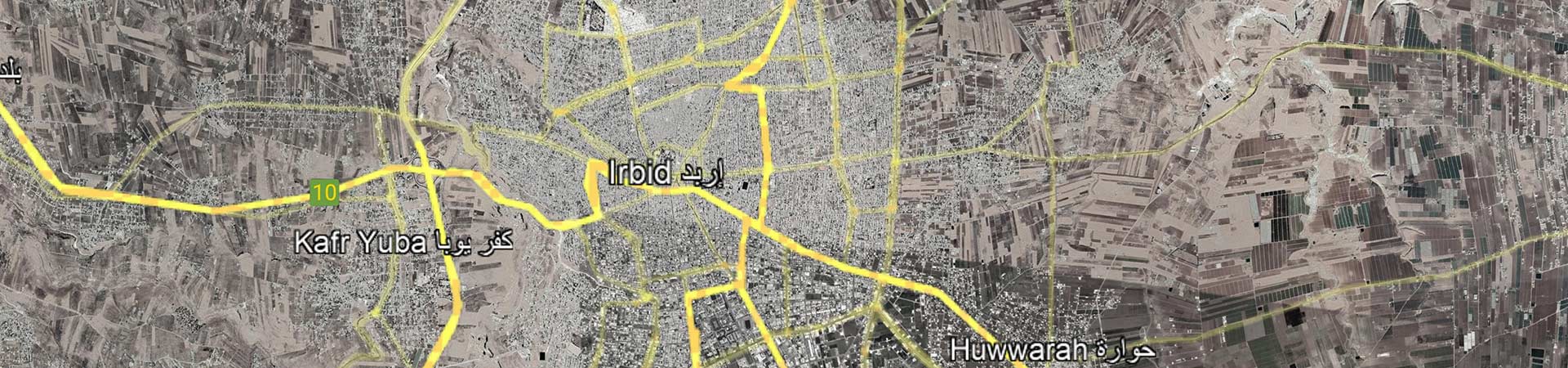
On the 6th of October, a virtual expert-mission was conducted to introduce practitioners from Irbid Municipality in Jordan to the smart mobility solutions provided by MOBIDATA BW – MOBILITY DATA AND SERVICES FOR BADEN-WUERTTEMBERG.  

Irbid municipality is the second largest city in Jordan that hosts more than 200,000 Syrian refugees and is home for two major public universities. In its role to contribute to the NDCs in Jordan, Irbid municipality is aiming to reduce GHG emissions by 40% before 2030. To achieve this target, Irbid municipality has embarked on several initiatives including establishing a Traffic Awareness and Transportation Team, designing geodatabases for transportation and mobility with GIS, mapping mobility and transportation city challenges and solution, improving urban public transportation, as well as designing and planning low carbon mobility scenarios in collaboration with Med Cities.

GIZ – using mobile phones to respond to the COVID-19 pandemic

Many countries are currently seeing a renewed increase in COVID-19 infections, and as case numbers rise, so too does inaccurate information about the virus. The World Health Organization (WHO) has coined the phrase ‘infodemic’ to describe this parallel epidemic of inaccurate medical information and misleading guidance on tackling the virus. And groups living in remote rural areas of Africa, for example, often have no direct access to the internet or other media for reliable information.

Deutsche Gesellschaft für Internationale Zusammenarbeit (GIZ) GmbH has launched the ‘CallvsCorona’ Project to tackle this. The idea dates back to April 2020, when it was one of the outcomes of a ‘hackathon’ to find ways of tackling the pandemic. On behalf of the German Federal Ministry for Economic Cooperation and Development (BMZ), the project operates a 24-hour interactive phone service in five countries to combat misinformation about COVID-19. With information about the virus available round the clock, callers can find out about specific topics at the touch of a button on their phones. 

Radio playlets provide information on COVID-19 in particular to the illiterate

The project has also produced 95 informative radio playlets, using everyday stories to provide valuable information on how to behave. This offers a reliable source of information, in particular for people who cannot read and write.

The wide distribution of basic mobile phones and access to radio stations across Africa means that even those living in the remotest regions have access to the information they need through ‘CallvsCorona’. More than 250,000 people have already accessed information directly via their mobile phones.

The phone service is provided by a social enterprise, Viamo, and after launching in Madagascar, it is now also available in Haiti, Malawi, Mozambique and Zambia. The project works closely with local GIZ programmes to reach as many people as possible. ‘CallvsCorona’, which is co-financed by the European Commission, will be rolled out even more widely from October this year. 

Plans also include a focus on new aspects of COVID-19, such as information about vaccinations and health care in the pandemic. ‘CallvsCorona’ will additionally be rolled out in Nigeria and Senegal, enabling it to reach up to 400,000 more people.

Digitalisation: Developing your own ideas based on international practice

After the successful launch of the working process on 21 September 2021 with a kick-off event, the Digitalisation Working Group, composed of 19 municipalities from seven countries – Albania, Bosnia and Herzegovina, Georgia, Moldova, Northern Macedonia, Serbia and Ukraine – continued the process of mutual learning and building a network of peers with similar initiatives, creating space for potential future collaborations, focusing mainly on developing their own initiatives, ideas and projects with the acquired knowledge and capacities.

In order to meet the schedule and objectives set out in the group’s action plan, four meetings were held within two months, focusing on different important aspects.  The work process started with the identification of challenges faced by the participants, such as: lack of software capacity, time-consuming documentation of the digitisation process, low digital literacy and lack of compatibility of city archives.

Following this, the next session focused on identifying initiatives and possible measures already implemented or planned by municipalities to mitigate or completely eliminate the problems.  These initiatives included the creation of a unified state register for citizens, the development of an app to facilitate access to municipal services, among others. 

After the first two sessions, the urban practitioners present were given the difficult task of elaborating and pushing their ideas for future projects. In the two following sessions, the participants were able to develop ideas and later define their projects, while at the same time using their newly acquired knowledge.

As a result of the intensive work in the period from September to October 2021, the practitioners participating in the learning process not only created and gained a new knowledge base for their future or ongoing project, but also insights into the international practice of their colleagues. All members received recommendations and suggestions from participants and practitioners, while at the same time a supportive and encouraging environment was created within the group, offering potential for future collaborations or joint ventures.

Sessions in retrospect

The working group met four times for four-hour sessions that allowed members to present their projects and their development while listening to some good practices from the speakers.

Workshop I: Ideation

Workshop II: Consolidation

Workshop III: Solutions

Workshop IV: Opportunities

First Response Mechanisms, Fake News and Crisis Communication

Working group of crisis management, consisting of urban practitioners from 14 municipalities across 9 countries: Armenia, Bosnia and Herzegovina, Bulgaria, Georgia, Kosovo, Moldova, Montenegro, Serbia and Ukraine, commenced its work on 20th September 2021 with Kick-off meeting.

Considering that this initiative comes as part of Connective Cities COVID-19 Programme and its objective is to support cities’ resilience during and after COVID-19, working group had embarked on a journey of rigorous analysis and discussions on matters and issues most relevant to their realities, worsened due to pandemic.

Process of work for the group consisted of homework being prepared for each session, depicting various scenarios of crises, disasters, their solution schemes as well as plans that could have been internalized by institutions for future preparedness.

During the session’s topics of Disaster Risk Reduction, First Response Mechanisms, Fake News and Crisis Communication were featured as important structures and knowledge basis for participants to take into account in their everyday works.

As work in the sessions continued, group members had jointly worked on the list of challenges, they considered important, such as lack of resources invested in piloting of appropriate technologies, contingency plans or in support of most vulnerable groups or even establishments such as SMEs. After compiling a comprehensive catalogue of challenges, participants were asked to focus on coming up with initiatives that would come as interventions dealing with issues indexed before. Participants were later using S.M.A.R.T. scheme for assessment of initiatives and solutions they have come forward with.

As a consequence of this series of workshops on guided peer-to-peer exchange, involved urban practitioners gained, tremendous experience in coming up with action plans, they learned methods and outlets of effective crisis communications, while also gaining some theoretical practice in potential risk and loss assessment.

Sessions in Retrospect

Working Group has met on four occasions, allowing members to present their initiatives, projects and thoughts on establishing elaborate crisis response mechanisms in their respective municipalities.

Workshop I: identification of crisis management, resilience and Covid-19 response challenges

Workshop II: analysis and definition of the challenges based on experiences, knowledge transfer and international discussion

Workshop III Crisis Management Southeast Europe (SEE): Prioritisation and solutions scan

Workshop IV Crisis Management in Southeast Europe (SEE): Identification of cities’ future initiative

Support for the food processing sector in Qalqilya, Palestine

On the 6th of October, experts from the Food Cluster of  Business Upper Austria conducted a virtual expert mission with Qalqilya municipality from Palestine, represented by Heidrun Hochreiter and Khaled Nazzal respectively.

As part of the learning process on local economic development and job creation in the MENA region, the representatives of Qalqilya municipality in Palestine have developed a project that aims at supporting home-based businesses in the food processing sector. To delve into innovative ideas that can strengthen their proposal, the municipal team from Qalqilya municipality participated in an expert mission led by Heidrun Hochreiter from the Food Cluster of Business Upper Austria.

The expert mission included a presentation from the representative of the municipality of Qalqilya (Khaled Nazzal), who provided an overview of the local strategy for economic development and the municipality’s potential role in supporting home-based businesses. The municipal strategy for local economic development encompasses three pillars: mitigation, international and local investments, and provision of infrastructure services.