Are we on track for a green recovery? Not Yet

One year from the onset of the pandemic, recovery spending has fallen short of nations’ commitments to build back more sustainably. An analysis of spending by leading economies, led by Oxford’s Economic Recovery Project and the UN Environment Programme (UNEP), finds only 18.0% of announced recovery spending can be considered ‘green.’. The report “Are We Building Back Better? Evidence from 2020 and Pathways for Inclusive Green Recovery Spending” was supported by  the International Monetary Fund and GIZ through the Green Fiscal Policy Network (GFPN).  

It calls for governments to invest more sustainably and tackle inequalities as they stimulate growth in the wake of the devastation wrought by the pandemic.

The most comprehensive analysis of COVID-19-related fiscal rescue and recovery efforts by 50 leading economies so far, the report reveals that only $368bn of $14.6tn COVID-induced spending (rescue and recovery) in 2020 was green.

More: Are we on track for a green recovery? Not Yet – UNEP

Her City

There is a lack of knowledge in participatory urban planning and design, particularly in involving vulnerable groups in urban development processes. Research has shown that participatory urban development with girls and young women, local actors, as well as multi-level decision-makers, creates opportunities for more inclusive, equal and sustainable urban development.

Thus, Her City provides an opportunity to build capacity on a larger scale. Her City provides municipal professionals, urban actors and local decision-makers with a solid toolbox for mainstreaming youth, gender and socioeconomic perspectives by strategically involving girls and young women in urban planning and design.

Her City’s ambition is to contribute to a range of the 2030 Agenda Sustainable Development Goals (SDGs): SDG3 on health and well-being, SDG5 on gender equality, SDG10 on reducing inequality, SDG11 on sustainable cities and communities, SDG16 on peace, justice and strong institutions and SDG17 on partnerships. However, previous experiences have shown that this approach also contributes to implementing other SDGs on the local level.

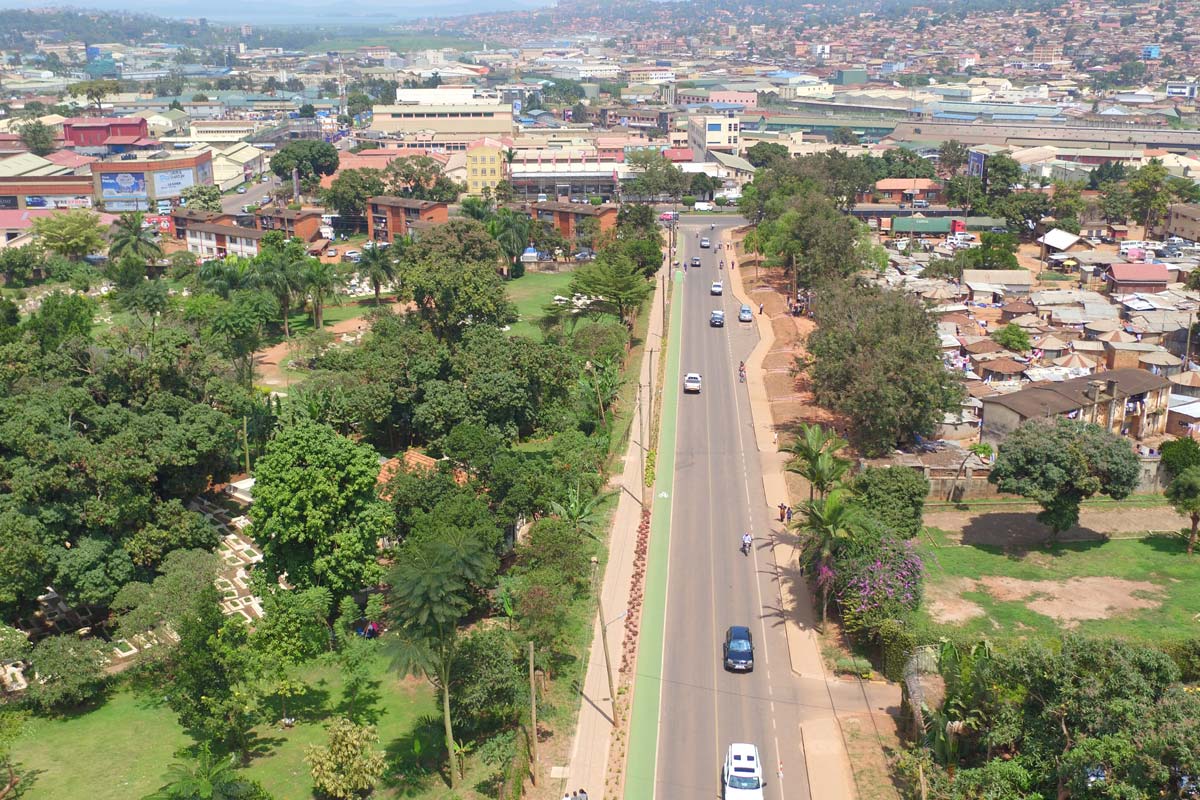
Implementing the Non-Motorised Transport Pilot corridor in Kampala City, Uganda

Integration of Non-Motorised Transport (NMT) infrastructure in most African cities has always been an afterthought. This has been witnessed by the uncoordinated mix of modes in the urban areas and the continuous effects it has had on the economy and the functioning of major towns and urban areas. The City of Kampala has decided to trailblaze in this area of transforming urban mobility in East Africa, a region renowned for traffic congestion and stressful commuting. This was necessitated by the ever-increasing urban population and the resultant increased demand on infrastructure. Namiremebe Road and Luwum street were chosen as the pilot areas for the program as they pass through the city center and are the major public transport hub for in the city. The aim of the program was to have an integrated network for all modes.

Interview with Daniel Onyango on Crisis Communication

Nairobi, Kenia, a troubled place that woke up Daniel Onyango and friends’ creativity to rose awareness for the safety measures. He lives in one of the biggest informal settlement of the capital where people did not understand the magnitude of COVID-19.

More: https://youtu.be/SVi5u3_5y-s

Join us and watch a special series of videos and podcasts that will show how to overcome a crisis from many different points of view. More videos, podcasts and interviews coming soon on our COVID-19 page.

Podcast with Dr. Lardo Stander: Economic Response and Housing

“The social compact is critical in order to respond quickly and appropriately to future pandemics.”

Economic modelling to better understand crisis scenarios; mapping vulnerable groups for targeted help. Dr. Lardo Stander from Pretoria, South Africa, told us how did they deal with the South African slums’ economic and housing problems during lockdown.

More: https://youtu.be/Z2XUO7wxIPI

Join us and watch a special series of videos and podcasts that will show how to overcome a crisis from many different points of view. More videos, podcasts and interviews coming soon on our COVID-19 page.

Podcast with Nadia Odjo: “Smart Schooling”

 “We learned to use what we have.”

Listen to Nadia Odjo, a SmartSchooling natural from Jacmel, Haiti, and founder of the B.R.I.T.E Initiative. She implemented distance learning at her school by her own besides a disconnected community that even had problems setting up e-mail accounts.

More: https://youtu.be/YKV8qFFVbEs

Join us and watch a special series of videos and podcasts that will show how to overcome a crisis from many different points of view. More videos, podcasts and interviews coming soon on our COVID-19 page.

Infection chains – preventing infections through distance, communication and support for the informal sector

Around 100 municipal practitioners from more than 20 Latin American and European cities, including Brazil, Peru, Mexico, Colombia, Costa Rica, Chile, Ecuador, El Salvador, Spain, the United Kingdom and Germany, participated in two virtual events on the topic of “Infection Chains – preventing infection through distance, communication and supporting the informal sector”.

During the virtual exchange of experiences, which was held as part of the series of events on “Municipal response to COVID-19”, the participants presented and discussed practical examples from their cities and exchanged experiences on the topics of infection chains and prevention measures, as well as on the topic of crisis communication.

In the first virtual event, the challenges in the areas of infection chain tracing and Covid-19 testing strategies were discussed intensively, because they represent urgent problems for many Latin American cities. The exchange of experiences revealed that crisis communication in particular is an important concern for municipalities – in European as well as Latin American cities alike.

Municipal practitioners face the challenge of raising public awareness of the need for the measures taken over a long period of time. Therefore, the focus of the second event was on the topic of communication. Among other things, strategies of cities were presented on how municipal crisis communication can be designed. It was discussed how cities can inform their residents about public restrictions and Covid-19 in a transparent, inclusive and understandable way.

The virtual events provided space for an interactive exchange of experiences, which was very positively received. All participants took part in a lively discussion and were in favour of continuing the offer.

The languages offered included Spanish, Portuguese, English and (partly) German.

Programme

During the two events, six good practices from Essen and Stuttgart (Germany), Aracaju, Niterói, Belo Horizonte (Brazil) and Naucalpan (Mexico) were presented.

Participants also gained a new perspective on the pandemic from the presentation of three studies on municipal management of Covid-19 by the Brazilian municipal associations “Asociación Brasileña de Municipios” and “Confederación Nacional de Municipios,” as well as “Design Thinkers Group Spain” and “Whiteboard Innovation Israel”.

The aim of the virtual event was also to actively involve the participants. The space for questions between the presentations and the subsequent discussion were used intensively for exchange.

The following questions were discussed during the two events:

  1. What measures can be taken to interrupt infection chains and what role can the municipality play in this?
  2. How can infections be traced and what are local challenges in doing so?
  3. What is the role of the informal sector in relation to infections?
  4. What strategies can be taken to make crisis communication inclusive, transparent and understandable?
  5. How can communities with limited access to digital communication tools be reached?

Good practice presentations

Presentations on 14.10-2020

Decentralised mobile sample collection strategy of the city of Essen.
Jörg Spors, Hygiene Officer of the Fire Department of the City of Essen, Germany

Measures taken by municipalities to combat the COVID-19 pandemic.
Eduardo Tadeu Pereira, Director “Asociación Brasileña de Municipios” (ABM), Brazil

Fighting the pandemic with strategic management and innovative measures, Aracaju, Brazil.
Waneska de Souza Barboza, Aracaju Health Department, Aracaju City Hall, representative of the National Front of Mayors (FNP), Brazil

Government action to combat Covid-19 in Naucalpan, Mexico.
Mauricio Eduardo Aguirre Lozano, Secretary of the Municipality of Naucalpan, Mexico

Survey on covid-19: focus on local government and support from federal agencies.
Carla Albert, Health Worker, Confederación Nacional de Municipios (CNM), Brazil

Presentations on 05.11.2020

Opening Speech “Global Human Research Project”. Jorge Roriguez Nieto,
Design Thinkers Group Spain and Amir Hoshia, Whiteboard Innovation Isreal.

Integrative Crisis Communication, Stuttgart, Germany.
Ayşe Özbabacan, Integrative Crisis Communication Officer, Stuttgart, Germany,
Simone Fischer, Integration Policy Officer, Stuttgart, Germany,
Reinhard Schröter, Operations Manager Bus and Tram, Stuttgarter Verkehrsbetriebe, Stuttgart, Germany.

Covid-19 and the implications on the sewage system, Niterói, Brazil.
Camilla Franco, Undersecretary of Health, Niterói Municipal Health Secretariat, Niterói, Brazil

Communication in Crisis: Citizens, Passers-by & Customers, Belo Horizonte, Brazil.
Hugo Salomão França, Director of International Relations, Belo Horizonte City Hall, Brazil.

Results

Through peer consultation, participants were able to share their knowledge and experiences around the topics of infection chains and crisis communication, as well as analyse common challenges. Furthermore, thanks to international expertise and the presentation of good practice examples, new approaches to solutions were disseminated.

After the virtual session, participants can continue their exchange on the Connective Cities virtual platform.

Towards the Just City in Kenya

In the next 25 years, Africa’s urban population is set to double. By 2040, the majority of Africans will be living in cities. There are numerous reasons for this: climate change, violent conflicts and the hope of finding work or education, although this list could easily be extended. Urbanisation thus constitutes one of the greatest transformations facing Africa in the 21st century.

Despite the diversity of the African continent, however, they are so far mostly “unjust” cities that people are moving to. The majority live in informal settlements and work under precarious conditions, mostly in the informal sector, without employment contracts and social security.

Towards the Just City in Kenya is the first publication of its kind that explores the conceptualisation and application of the “just city” concept in Kenya. The authors explore the concept from various dimensions, namely:

  • Conceptualisation of the just city in Kenya.
  • Locating the just city in the constitutional, policy, legislative and institutional context.
  • Discussion of spatial justice in the context of planning and housing; and
  • Interrogating practical ways in which cities express injustice and how these can be practically addressed, with examples from the public transport sector.

The study offers recommendations on how the just city concept can be realised in Kenya, looking specifically at urban institutions, citizens’ rights, housing policies and urban public transport systems.

With its just city project, FES Kenya and its partners facilitate dialogues through working groups which bring together civil society, trade unions, Members of County Assemblies, Government representatives, and academia working in urban centres of Kenya with the objective to jointly work for a just city.

Women’s Training and Development Center in Hay Al-Andalus municipality in Libya

The Centre for Women’s Development and Training was planned as a socio-economic project that aims at women’s economic empowerment and promoting female entrepreneurship. The center provides job matching services and capacity development courses that include trainings on various scientific and social topics as well as recreational activities that target the wellbeing of the beneficiaries.

The project is part of the European Union and Bundesministerium für wirtschaftliche Zusammenarbeit und Entwicklung (BMZ)- funded “Support to Municipalities” programme in Libya, which is implemented by GIZ in cooperation with the Libyan Ministry of Local Governance and the Municipality of Hay Al-Andalus. Other key stakeholders included the local civil society, the office of women’s empowerment in the presidential council, the Ministry of Labour and businessmen in the municipality.

How ‘school streets’ could create safer, healthier cities

Amid the COVID-19 pandemic, communities living in cities need cleaner air to breathe and outdoor public space to be social yet physically distanced.

Recognition of these issues has led public health experts, architects and urban planners to discuss how to design cities to respond to the pandemic.

One idea put forward has been the establishment of “school streets”: closing roads outside schools to motor traffic during school drop-offs and pick-ups.

School streets often involve other local action, too. This includes promoting active travel, such as walking and cycling, to get to school, getting local people involved in citizen science projects to monitor air quality and putting on events to celebrate the road closure.

Our research focuses on public health and air pollution. We recently worked with Holt House Infant and Carterknowle Junior schools in Sheffield, as well as with Sheffield City Council, to pilot the first school street in the city. The Sheffield pilot provides an excellent example of the valuable role that school streets could play in our cities, especially during a pandemic.

More