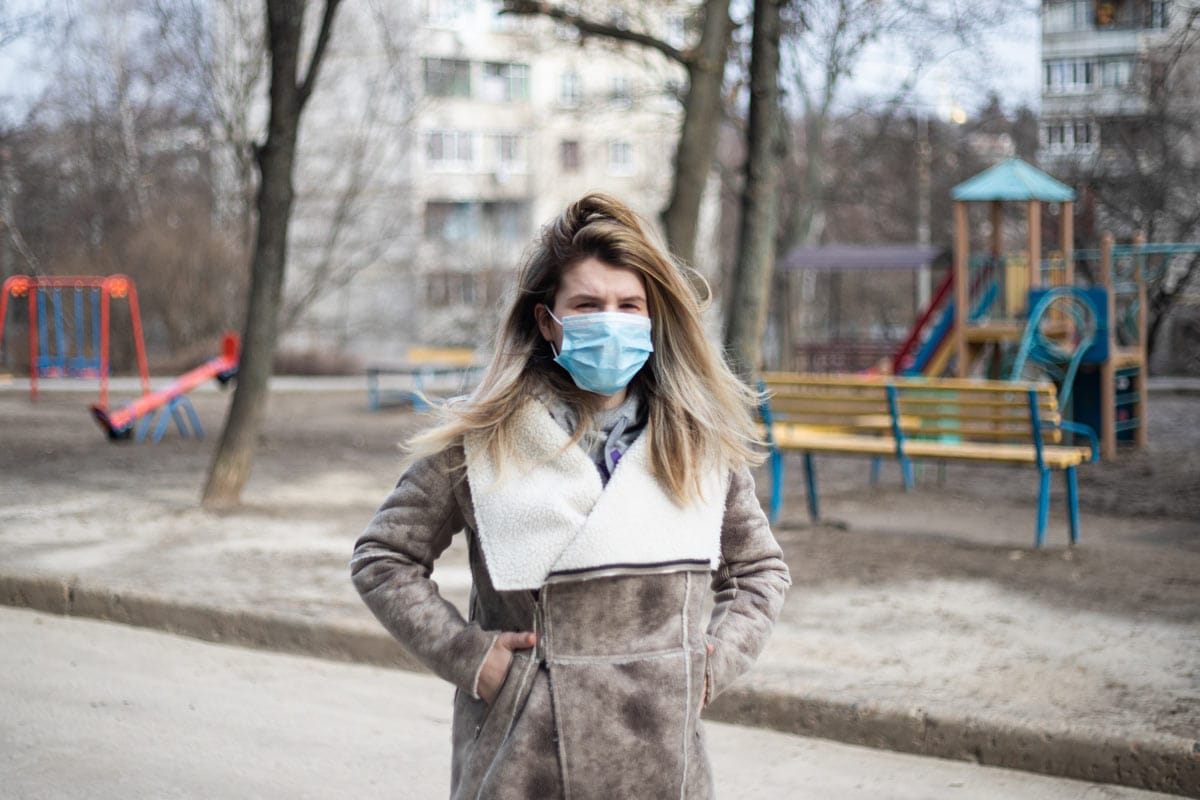
The city of Krusevac during the pandemic

Krusevac, a city in the heart of Serbia, took multiple actions during the pandemic to protect its approximately 58,000 inhabitants. The city’s crisis management included preventive measures. For instance, disinfectants in 200 large canisters were placed throughout the city and made available to the population free of charge, and the public enterprise “Veterinary Station Krusevac” disinfected public facilities. Furthermore, public health was an integral part of crisis management. Namely, the municipality of Krusevac built a temporary hospital with 150 beds in a sports hall to treat people with mild disease progression. In addition, a larger hospital with 500 beds was built after the first wave to be prepared for the second wave of the pandemic. 

For an effective and fast implementation of the COVID measures, not only the involvement of different stakeholders, such as the Serbian military, public enterprises, and the political administration of the city, but also the protection of vulnerable and at-risk groups was vital. Therefore, Krusevac organised and coordinated a volunteer service. Volunteers packed and distributed 62,175 food rations to pensioners, single parents during the first three months of the pandemic. Moreover, the city provided taxis to deliver food and medicine to people in need.

By now (as of July 2021), about 45 percent of Krusevac residents are fully vaccinated. In the coming months, the municipality will mainly focus on keeping interest in vaccination high in order to achieve herd immunity. 

The city of Krusevac is also working on sustainable and inclusive mobility concepts, for example by building new bicycle paths.

Further Information: 

Presentation: CITY OF KRUSEVAC  [PDF, 5mb]
THE DEPARTMENT OF DEFENSE AND EMERGENCY SITUATIONS

Veranstaltungsaufzeichnung in Englisch (Präsentation Krusevac beginnt bei der Minute 92:00): „Infection Chain Tracing in Southeast Europe (SEE) and Caucasus“ (Nur für Registrierte auf der Connective Cities Plattform) 

Contact

Dusan Todorovic,
Head of the Department of Defense and Emergency situations
dusan.todorovic@krusevac.rs

“A day in the world” – a virtual project that gives courage

The in-person meetings of the school partnership between Osterode in Germany and Kaolack in Senegal, which were postponed due to the pandemic, were replaced by a video project. The students recorded on video scenes from their everyday lives and how the COVID-19 pandemic is being tackled. They used the footage to produce a film entitled ‘A day in the world’.

Kruševac’s Vision – “A city accessible to all”

The Vision of Kruševac’s SUMP is that the urban environment and traffic should contribute to the city’s development. The aim is to make traffic accessible to all, regardless of age, gender, income, physical or mental ability. The target from the Agenda 2030 is „80:20“, namely that citizens will walk, cycle or use public transport to cover 80% of the trips they need to make.

Sustainable, Informed and Participatory Land Management and Land Use Planning in Rapidly Growing Cities

On the 11th, 12th & 14th of May 2021, Connective Cities held a dialogue event to address the topics of integrating nature-based solutions in land use planning, land information systems and participatory & inclusive land use planning. The event attracted the participation of 38 participants from municipalities, local government associations, national governments, research institutions and civil society organizations. The countries represented include Burkina Faso, Cameroon, Ethiopia, Germany, Ghana, Kenya, Netherlands, Rwanda, Senegal, South Africa, Uganda and Zambia.

The statistics as highlighted by Oumar Sylla (UN-Habitat) reminded us that the population in the cities is on the rise and this irreversible urbanization trend we are now faced with the challenge of channeling its effects especially in the area of land governance. Mr. Hilmar von Lojewski (DST) then emphasizes that we need to reduce land uses for building purposes to the utmost necessary amount.

This called for understanding of the impact of the rapidly growing cities to the wellbeing of its residents and acquaintance to the different ways in which cities can integrate Nature-based Solutions in their planning & implementation of city plans including green roofs and walls, permeable pavements and green spaces just to mention a few. This was delivered by Heidi Tuhkanen (SEI) and Emmanuel Letebele (eThekwini) showcased how the cities can integrate climate change in spatial development.

This dialogue event thus provided a platform for the cities to learn and exchange. 10 good practices were shared from both the cities in SSA and Germany, 4 collegial consultations held, and 7 project ideas conceptualized.

Stari Grad – how vaccination campaigns can reach groups at risk

As in many other countries, people in Serbia who want to be vaccinated have to book an appointment online and then get their jabs at a vaccination centre. But what about the elderly and people without internet access, or those unable to operate digital devices? And what do people do who can’t travel to the vaccination centres on their own? Stari Grad, in Serbia, shows how municipalities can reach this important target group in their vaccination campaigns.

Urban Gardening

The concept of Urban Gardening, which emerged in the seventies in New York, Manhattan, describes a communal garden use of urban green spaces. It therefore differs from the so-called “gardens for the poor” that emerged in Germany as early as the beginning of the 19th century and from which the allotment garden (“Kleingarten”) movement later grew from. Private allotment gardens and community gardens should be seen as complementary to each other and not as competition. In modern practice, there are increasingly mixed forms of private and community gardens. They range from cooperatively managed urban agricultural plots, to community gardens within allotments, botanical gardens or parks, to urban gardening with primarily social goals such as inclusion and environmental education.

Municipal practitioners from 9 countries and 16 cities discussed this new diversity of approaches and experiences in depth and jointly developed solutions and project ideas. They had accepted the invitation of Connective Cities and the Berlin districts of Berlin-Mitte, Pankow, Lichtenberg, Tempelhof-Schönfeld and Charlottenburg-Wilmersdorf to join the virtual dialogue event that took place from 20.04. – 22.04.2021.

Multidimensional: The COVID-19 urban restoration programme “Lviv tomorrow”

Ukraine, like most countries around the world, is strongly affected by Corona since March 2020. Individual cities experience little government support and are largely left to their own devices to combat and deal with COVID-19. Despite this challenge and only limited financial resources within the city budget, the city of Lviv managed to take quick and effective action.

The city, which is in northwestern Ukraine and has a population of about 750,000, established the “Lviv tomorrow” program to mitigate the negative consequences of COVID-19 and create the preconditions for improving the social, economic and cultural situation in the city. The program consists of 80 different projects, of which more than 50 already have been implemented.

An important pillar of the program is safety and health. The city of Lviv doubled the number of hospital beds available and set up its own COVID-19 testing laboratory. This allowed the number of COVID-19 tests to increase from 200-400 to over 3000 per day, speeding up the tracking of infected individuals and thus simplifying pandemic response.

The city also established new digital solutions that make it easier for the population to stay at and work from home. For example, a portal was created where the population can pay digitally for city services.

Especially the cultural sector was hit hard by the restrictions necessary to combat the pandemic. The city of Lviv is countering this by promoting open-air events and smaller cultural events, for example on balconies. This way, not only jobs in the cultural industry can be preserved, but also part of the life quality in the city can remain. In the uncertain times of the pandemic, cultural events are also a important psychological support for the population.

Another component of the “Lviv tomorrow” program is economic development. One project, for example, supports local food producers. In cooperation with supermarkets, food produced in Lviv is promoted and labeled with “made in Lviv” stickers.

With its extensive “Lviv tomorrow” program, the city of Lviv is taking action on many different levels to combat the pandemic and its effects. Not only the immediate aspects of the pandemic, such as the number of hospital beds, but also other areas of coexistence, such as cultural life, are included. Thus, not only acutely fighting the spread of Corona, but also creating a long-term perspective for the post COVID-19 city.

Contact:

Mr. Oleksandr Kobzarev
Director of the City Institute. Center of strategic planning in Lviv, Ukraine
o.kobzarev@city-institute.org

More Information:

LVIV TOMORROW. RESTORATION PROGRAM [pdf 11 pp.]

Interaktive Präsentation über Lviv (Only for those registered on the Connective Cities Platform)

Psychosocial support is more important than ever during the pandemic

Corona lockdown can heighten the psychosocial problems many people are facing, for example in their family or partnership. Where this is the case, municipal psychosocial services need to respond flexibly. In Munich, for example, counselling for clients with smaller children was spontaneously relocated to playgrounds.

Amman – strengthening social responsibility

With a prudent vision, the Greater Amman Municipality implemented several hard and soft measures to curb the impact of the pandemic on the local community using a three-pillars response approach: health, community, and environment. With the special focus on ‘community health and wellbeing’, the social development division fulfilled its role during the pandemic by implementing a myriad of measures under the umbrella of social services to the local community.

Being prepared in times of crisis

“We have distributed soap everywhere,” says Mishi Rama Mbete. The 48-year-old is sitting on a cardboard box in front of her mud hut, her hands folded in her lap. She wears the face mask correctly over her mouth and nose. “Corona is a terrible disease that has no cure yet. We are the medicine, our behaviour is, like when we wash our hands many times a day.” Mbete is one of 30 Community Health Volunteers from the informal settlements of Majengo and Mzambarauni who, on behalf of Participatory Slum Upgrading Project (PSUP) and its collaborative partner, the Community-based Organization Shining Hope for Communities (SHOFCO), tackled the initial stages of the COVID-19 outbreak, going door-to-door for weeks in awareness campaigns. She, among others, distributed hand sanitizers and soap, explaining the importance of washing hands properly, wearing a facemask, keeping social distance when possible, and recognising the symptoms of COVID-19 in time. Suspected cases of infections were referred to government facilities for further tests and follow-ups.

The awareness campaign is part of an emergency response package that PSUP and SHOFCO launched at the onset of the Corona outbreak in Kenya in March 2020. The aim, from the very beginning, was to prevent a looming disaster in the slums. No one was to be left behind during the pandemic. Together with the County Government of Kilifi and the communities in the PSUP project region, both partners set up 20 handwashing stations, maintained by men and women from the communities for a small additional income, to protect local people from the virus. The Community Health Volunteers were trained by the County Government’s Department of Health to use their expertise to conduct education and provide up-to-date emergency assistance.

More