Provision of basic services: solid waste management

Effective solid waste management service is vital in ensuring a sanitary environment for any population. With changes in lives and partial or total lock-downs, the provision of this crucial service was interrupted. With the spread of the virus, the general public is now using a lot of medical equipment including surgical gloves and masks. The unsafe disposal of this waste including the increase of medical waste, increases the risks and hazards especially to the waste handlers both formal and informal.

The virtual session on the 29th of October, 2020 was to highlight the issues that cities/municipalities are grappling with to ensure that this service is adequately provided, the workers are safe, and minimize the spread of the virus through the medical waste. Through cross-pollination kind of exchange between cities/municipalities in SSA and Kosovo, a very insightful discussion was experienced. 14 participants from Ghana, Kenya, Kosovo and Zambia with representatives from Nairobi, Kisumu, Accra, Kiambu, Gjilan and Vushtrri cities/ municipalities actively engaging.

Program

5 presentations from cities/municipalities and input from UNEP defined the discussions. The presentations were from Nairobi City, Accra, Municipality of Vushtrri, Municipality of Gjilan and then we got the recommendations from UNEP on how cities can improve solid waste management during the pandemic. The session was moderated and provided an opportunity for discussion and exchange among the participants. The cities/municipalities sought to answer the following questions:

  1. What have been the core challenges for the municipalities?
  2. What measures have municipalities put in place?
  3. How do the municipalities deal with vulnerable groups which were most affected by the pandemic?
  4. Have there been any lessons learned already for long term strategies to improve cities’ resilience (i.e. preparedness for pandemics or similar events in the future)?

Presentations

Solid waste management in Nairobi during the Covid-19 period
Ms. Patricia Akinyi

Covid-19 and solid waste management in Ghana
Ms. Charlotte Akwaah-Adjei

Current situation in the Municipality of Vushtrri – waste management system
Mayor Xhafer Tahiri

Solid waste management in the Municipality of Gjilan
Mayor Lutfi Haziri

UNEP’s recommendation to cities on solid waste management
Mr. Muhammed Omotola

Results

Different cities/municipalities are at different levels in solid waste management with Municipalities like Vushtrri having waste separation and recycling practices. Nairobi City had a lot to learn from the two municipalities in Kosovo. Cities need to be intentional about continuous improvement in the waste management chain. With the rich and diverse input, the discussions were beneficial.

The highlights of the session were:

  • The pandemic led to increase in domestic waste as lock downs loomed and also use of medical equipment (masks & gloves) by the public.
  • Financial constraints were a hindrance to ensuring timely provision of this basic service. There is need for budgeting and allocation of resources.
  • Intensive communication and education of the public and the municipal staff on proper handling of waste including promoting waste separation even at household level.
  • Digitalization of systems and procedures to minimize contact including payment for services.
  • Need for effective environmental policies and guidelines on management of waste especially the hazardous medical waste.
  • Coordination of the different levels of government and other sector players.
  • How past pandemics/ disasters have helped municipalities like Gjilan prepare for covid-19. We shouldn’t waste this pandemic and instead use the lessons learnt to prepare for future emergencies.
  • Establishing of emergency preparedness facilities and crisis management teams.

Waste to positive energy in Mafraq governorate in Jordan

The establishment of the composting plant to produce organic fertilizers was part of the plan for solid waste management in Jordan. The project was jointly planned by the Ministry of Local Administration and the UNDP in its first phase, and then it received technical and financial support from the GIZ in its second and third phases. The project aims to serve Mafraq governorate which hosts a large number of livestock farms, through the collection and treatment of animal manure to produce organic fertilizers to be used in agricultural land in the city.

Closed pilot cycle of plastic recycling in Rustavi

Rustavi is the fourth largest city in Georgia and one of the most important industrial centers. In this city, with partnership of Rustavi City Hall, Rustavi Innovations Hub and its partners, and support of UNDP Georgia, in 2019, was established and launched a closed plastic waste recycling pilot cycle involving municipal kindergartens and public schools. 

Climate Resilient Urban Development in Southeast Europe

From October 26th until November 6th 2020 around 30 urban practitioners from 11 Southeast European cities (from 8 different countries Georgia, Bosnia and Herzegovina, Montenegro, Belarus, Serbia, Slovenia, Ukraine, Germany) came together virtually to exchange their experiences and expertise in the field of Urban Mobility and Green Urban Infrastructure. Especially challenges in waste management, transportation and public lighting system and water revitalization were discussed intensively, as they represent pressing issues for many Southeast European cities.

The aim of the workshop was to jointly work out comprehensive project plans which can be the basis for technical and financial proposals for funding. The workshop focused on the following topics:

  1. Green Infrastructure – based on the notion that protecting and enhancing nature and natural processes are consciously taken into consideration in the context of spatial planning and territorial development.
  2. Urban Mobility – developing and implementing sustainable urban mobility plans (SUMP) including private as well as public transportation.

The event was a follow-up to the virtual dialogue event conducted in June 2020 with representatives of 24 municipalities as well as international experts. Where, based on innovative methodologies such as Design Thinking, participants from 9 countries worked on their first project ideas.

These two weeks of synchronous and asynchronous workshops were participated by the officials from institutions, representatives from urban networks that share the project’s objectives, and experienced professional from the civil society and the private sector, who work in the thematic areas as well as academia in the field of urbanism, spatial planning, geography, climate change and other disciplines. During the workshop, also donor organizations were invited to get to know the projects, to answer questions of the municipalities and to support financial proposals and grant applications written in a professional way.

Local Development Program for the City of Agadir in Morocco

Agadir municipality has pursued ambitious policies aimed at enhancing the quality of life of the city’s inhabitants, while protecting the environment and fostering sustainable development. The undertaken efforts targeted various key areas, in which the requirements and responsibilities for achieving environmental, social and economic sustainability were met.

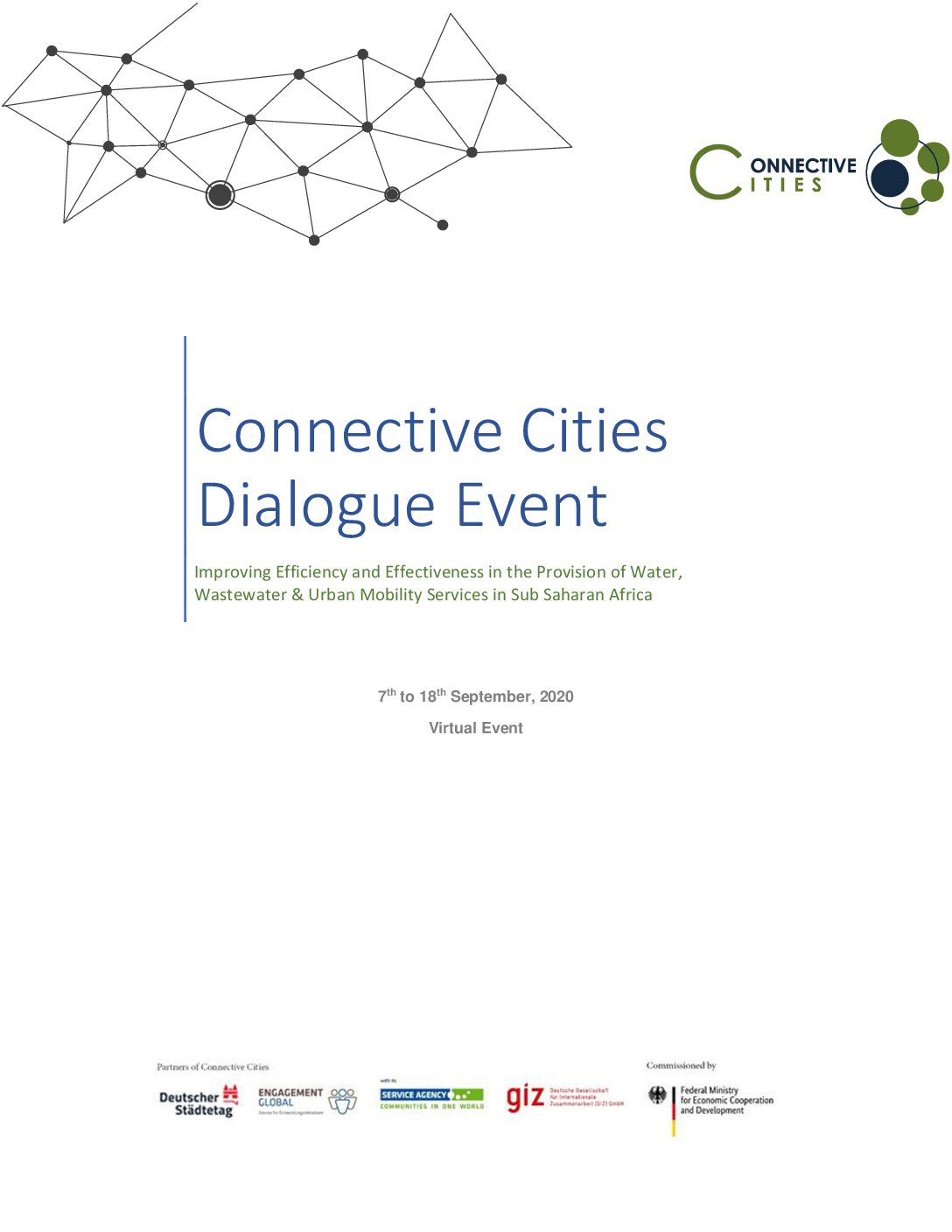
Improving Efficiency and Effectiveness in the Provision of Water, Wastewater & Urban Mobility Services in Sub Saharan Africa

Between the 7th and 18th of September, 2020 in intermittent virtual sessions, about 43 participants from 24 cities and representing 7 African countries and Germany, congregated to share best practices and develop project ideas in the afore-mentioned areas

With the ever-increasing population and urbanization in most countries in Sub Saharan Africa, the demand for basic services also increases yet the municipalities and cities have not been able to match the supply to demand. A lot of challenges ail these sectors but there are efforts to sustainably sustain service provision.

The objectives of the dialogue event were to:
1. Facilitate exchange of experiences based on good practices of public service delivery among urban practitioners from municipalities in Sub-Saharan Africa and Germany,
2. Facilitate peer-to-peer advisory services to address the current challenges of public service delivery in the cities of the participants and create new knowledge,
3. Develop the capacity of the participants to analyse existing strategies and to formulate project ideas and envisaged solutions for efficient and effective public service delivery, and
4. Define future support measures to strengthen project development and implementation skills as well as ongoing exchange through the community of practice, Connective Cities.

The countries involved in this dialogue event were; Ethiopia, Ghana, Germany, Kenya, South Africa, Tanzania, Uganda, and Zambia. The event was a starting point for action planning for project ideas to be developed.

This report is the documentation of the virtual event.

Municipal services in the pandemic

Numerous German and international experts from 11 different countries met on 04.11.2020 at our virtual event “Municipal services in the pandemic”. The central topic was how municipal administration and municipal companies can act to improve the response to the current crisis.

Their practical experience was at the forefront. The cities of Rostock and Bremen (Germany) presented good practice examples of waste and water companies, and the Secretary for International Relations of Sao Paulo presented good practices from Brazil’s largest city. The other participants from Tunisia, Indonesia, Morocco, Somalia, Nepal, Iraq, Jordan, Sri Lanka, Palestine and the United States also shared their approach to the pandemic in the municipal services sector and discussed possible lessons learnt from the crisis.

Through our peer-to-peer consultation, the exchange was intensified and all participants had the opportunity to discuss among their peers, in order to support each other. In the end, new project ideas for further cooperation could be discussed and next steps suggested.

Call for participants: Municipal services in the pandemic

This event is part of our series International exchange of experiences: lessons learned in the Covid-19 crisis, and brings German municipal experts together with international actors to discuss how municipal administration and municipal companies can act to improve the response to the current crisis. Among other issues, this dialog will discuss good practices of response to the challenge of providing municipal services of water and waste management in the pandemic. Practical examples will be presented by experts from Rostock-Germany and abroad on the topics of waste management and water provision. The overall aim of the event is to achieve a joint exchange of experiences and to develop ideas for cooperation.

Event Registration

If you have any queries about the event and the participation process, we encourage you to contact:

Alexander Wagner
alexander.wagner@engagement-global.de
Telefon +49 (0)228-20717-455

Thiago Garcia
thiago.garcia(@)engagement-global.de
Telefon +49 (0)228-20717-633

Used Vehicles and the Environment

Millions of used cars, vans and minibuses exported from Europe, the United States and Japan to the developing world are of poor quality, contributing significantly to air pollution and hindering efforts to mitigate the effects of climate change. The UNEP-report shows that between 2015 and 2018, 14 million used light-duty vehicles were exported worldwide. Some 80 per cent went to low- and middle-income countries, with more than half going to Africa.

The first-ever report of its kind, calls for action to fill the current policy vacuum with the adoption of harmonized minimum quality standards that will ensure used vehicles contribute to cleaner, safer fleets in importing countries.

Green Urban Infrastructure in Asian Cities

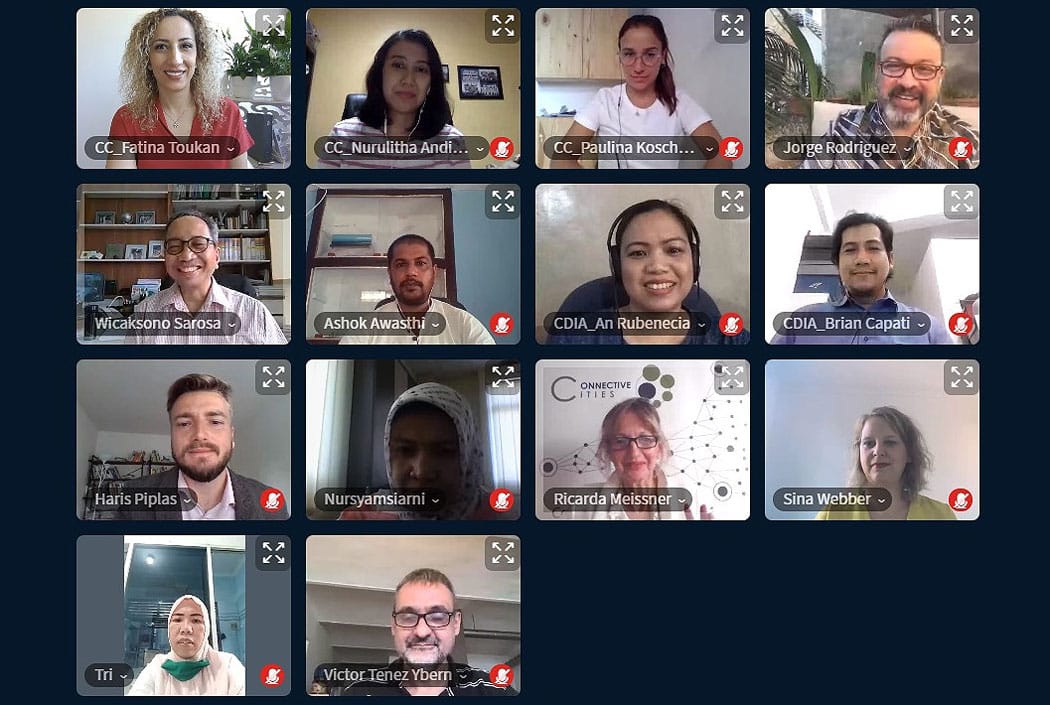
From August 3rd until August 14th, 2020 around 30 urban practitioners from 6 Asian Cities came together virtually to exchange their experiences and expertise in the field of Green Urban Infrastructure. Especially challenges in waste management and water sanitation were discussed intensively, as they represent pressing issues for many Asian cities.

The aim of the workshop was to further develop existing project ideas by discussing arising challenges and trying out new methods to find new perspectives and approaches to urban planning. The event was a follow-up to the dialogue event in Bandung, Indonesia in November 2019.

Due to the restrictions imposed on all of us by the Covid-19-pandemic, the event was conducted virtually by using the Connective Cities Platform. To ensure an enriching learning experience, the event took place over two weeks and included synchronous workdays with various keynote presentations as well as asynchronous days on which the participants could work on their project ideas at their own pace.

Six projects from Indonesia and Nepal were presented and further developed (see presentations).