Improving efficiency and effectiveness in the provision of water, wastewater management and urban mobility services

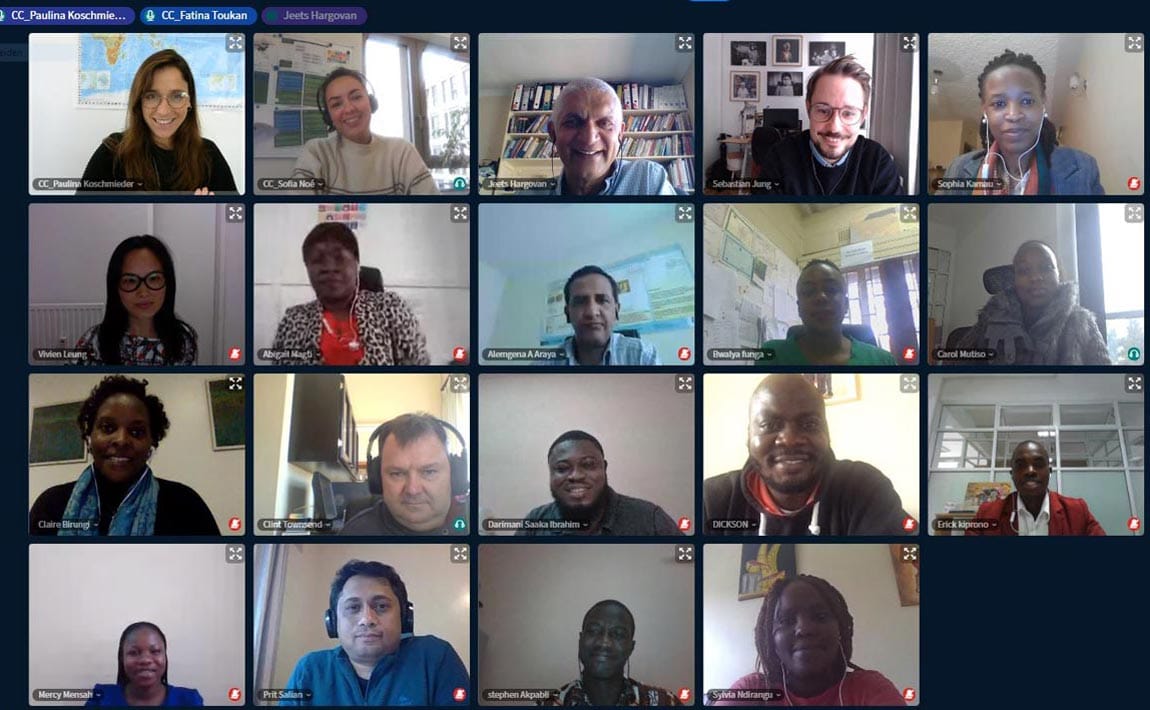
The Covid-19 pandemic has transformed what was known to be normal. In the new normal, Connective Cities has also resorted to virtual formats of the dialogue events. Between the 7th and 14th of September, in intermittent virtual sessions, about 43 participants from 24 cities and representing 7 African countries and Germany, congregated to share best practices and develop project ideas in the areas of water supply, wastewater management and urban mobility.

The rapid urbanization in Sub Saharan Africa has seen an increase in the urban population and subsequently the demand for basic urban basic services such as water, sanitation and sustainable transport.  More than half of the urban population in SSA is yet to access these basic services.

This event provided a platform for utilities and cities to share on solutions to increase access to water supply, different approaches in management of wastewater and approaches in implementing sustainable urban mobility.

The conclusion of the event was crowned with six project ideas for Connective Cities to consider for further support in refining the concepts.

The EcoCentro in Quito

The city of Quito, being the capital of Ecuador, is home to important companies and the second most populated city, with 2.65 million inhabitants. In the Metropolitan District of Quito (DMQ), around 2,200 tons of common solid waste are produced daily; of which almost 1,254 tons (57%) are of organic origin. Around 80% of the weight of organic waste is moisture that is transformed into leachate, which generates difficult treatment and high costs for the Public Company of Integral Waste Management of the Metropolitan District of Quito (EMGIRS-EP).

Currently, the sanitary landfill located in the Inga sector, administered by EMGIRS-EP, has a remaining useful life of 3 to 5 years due to its available space. Thus, the diversion of organic waste and its respective use is the most appropriate solution. With this background and in the framework of the program “Quito Free of Waste – Organic waste”, EMGIRS-EP designed in 2018 the EcoCentro project. EcoCentro aims to raise awareness among citizens about the use of organic waste, the use of biological fertilizers and the planting of vegetables and/or fruits in urban gardens.

EcoCentro counts on the contribution of the academia to develop research in topics such as optimization of composting and vermiculture processes, fertilization of urban crops (bio fertilizers), and urban metabolism (flows of carbon, nitrogen, phosphorus in the city). The Economic Development Agency CONQUITO and its program AGRUPAR – Participatory Urban Agriculture Project, and the Quito Food Bank, which delivers the products of the EcoCentro to vulnerable groups with limited access to healthy food in orphanages, nursing homes and social foundations, also support the project.

EcoCentro is an integral initiative that manages to articulate spaces for sports, leisure and nature protection; and allows citizens to better understand the urban and rural link, contemplating the idea of a healthy life, responsible consumption and sustainable management of resources.

Call for participants: Provision of municipal services during a pandemic

Covid-19 pandemic has caused a lot of negative impacts to many cities and municipalities across the world. According to UN Habitat, about 44% of the total African population live in urban areas of which 47% live in slums and informal settlements characterized by poor access to potable water and safe sanitation, overcrowding and often deficiency in service provision. The inadequate capacity of many Sub-Saharan countries to provide adequate water infrastructure despite being a major necessity in the fight against the covid-19 pandemic has made it difficult to contain the virus spread within many cities. This makes cities more susceptible in the ongoing spread of the pandemic in the region and the enforcement of the WHO guidelines on prevention and fight against the pandemic a challenge. Sub-Saharan Africa’s rapid and unplanned urbanization is therefore seen as a huge risk factor of Covid-19.

The impact of this pandemic has been felt worldwide yet cities have responded with different measures to avert the spread and cushion against long-term impacts and even future pandemics. It’s against this background that Connective Cities1 is offering a platform in which cities will share the challenges they have experienced and interventions that have either been implemented or are being planned to safeguard against the negative impacts and future pandemics.

In the first series, we look at the provision of municipal services and specifically water supply and solid waste management services.

Conference language is English.

More information:Concept paper [pdf 3 pages]

Participation and contact

If you have further questions or would like to participate, please send an e-mail to Sophia Kamau (sophia.kamau@giz.de), Regional Coordinator for Connective Cities in Sub-Saharan Africa

Phasing out plastics

Plastics today feature in every part of our lives and are found everywhere. The global realisation that plastics are an environmental problem has focused on plastic waste and pollution, but plastics are also problematic in terms of the global climate emergency, because almost all plastics today are made from fossil fuels. 

Building on recent literature about plastics and climate change, this report explores the potential for extensive emission reductions in the plastics sector. Using a scenario approach, we present an assessment of the technical feasibility of phasing out the production of new fossil plastics by 2050, based on detailed analysis of the potential to transform the use of plastics in four sectors – automotive, construction, packaging and electrical and electronic equipment (EEE).

South-East European Local Governments in Post Covid-19 Socio-Economic Recovery

South-East European (SEE) local governments (LGs) have been and will certainly remain at the forefront in responding to the COVID-19 pandemic social and economic crisis. In serving and protecting their communities they have been facing unprecedented challenges in multiple dimensions. SEE local governments have been responding to these challenges with a strong spirit of solidarity, putting their citizens lives before everything else and working tirelessly to provide support to the most vulnerable.

The crisis required local governments to take timely measures to shut down selected local services, quickly switch to remote working practices and digitalise administrative services, expand programs for securing citizens healthcare, expand social protection and care for a significantly higher number of vulnerable people, take measures to allow the smooth implementation of online or long-distance learning, etc. In the aftermath of the control or minimisation of the first wave of infection SEE local governments have taken specific ad hoc measures to support the survival of their local communities and economies.

The purpose of this survey is to help improving the understanding over the impact of the COVID-19 crisis at the local government level in South-East Europe, identifying effective and innovative social and economic recovery strategies and ultimately helping formulating concrete policy proposals to inform advocacy efforts of NALAS member Local Government Associations.

C40 Mayors’ Agenda for a Green and Just Recovery

As the tragedy of the COVID-19 pandemic unfolds, mayors’ immediate priority is to face this unprecedented crisis and protect lives. At the same time, the city leaders who together established the Global Mayors COVID-19 Recovery Task Force are leading in taking the first steps towards recovery. They have committed to providing the swiftest and strongest possible rebound for their citizens and reaffirmed commitment to the principles of the Global Green New Deal — to protect our environment, strengthen economies and build a more equitable future – and reach out to other cities, youth, unions, business and civil society to join in this effort.
[…]
By taking a sustainable path at this critical juncture, by respecting science, fostering unity and embracing a spirit of innovation and purpose, cities will secure the best recovery they can and avoid the worst impacts of the climate crisis. Amid the devastation of this global pandemic, mayoral leadership has never been more important.

Nine principles for a green and just recovery are elaborated that can support cities’ recovery efforts.
More

Municipal Response to Covid-19 Pandemic II

More than 30 municipal representatives from around 20 cities in MENA and Sub-Sharan Africa participated in the second virtual event of the knowledge-exchange series on Municipal Response to the COVID-19 Pandemic.

Municipal representatives from both political and technical levels were invited and they engaged in knowledge-exchange to analyse and discuss practical examples of municipal response related to provision of urban basic services such as water and solid waste management.

Climate Resilient Urban Development in South East Europe

More than 40 local urban practitioners from 24 municipalities and 8 countries, fitting under the EU’s regional dimension of Eastern Partnership and Western Balkans, intensively exchanged their experiences/municipal expertise within 2 weeks of digital experience on the topic of “climate resilient urban development” and jointly developed solutions and project ideas. They followed the invitation of Connective Cities to an unprecedented and unique experience: Virtual Dialogue Event: “Climate Resilient Urban Development” on 8-19 June 2020.

It has been increasingly understood that rapid urbanization and climate risks mean greater vulnerability to urban development. Many cities worldwide face significant challenges arising from natural hazards. The Southeast European region is no exception, whereas the climate resilient urban development becomes a central pillar of local sustainability policies. Most of the countries in the region continue to face environmental and climate change challenges.

This event offered a virtual platform to discuss these challenges and supported municipalities in developing locally adapted solutions for climate challenges; in exchanging cities’ significant experience of developing successful possible options and good practises; in transforming innovative urban project ideas into digital solutions especially in the aftermath of the COVID-19 outbreak, as this latter continues to impact heavily the lifestyle at all levels including the sustainable urban development workers and it’s needed to adapt to more innovative and agile ways of working for future crises responses.

During the 2 weeks asynchronous and synchronous digital experience participants listened to inspiring Keynote presentations from leading European scientists and shared insights with peers in carefully curated Peer2Peer collaboration and exchange formats. They learned how to collaborate digitally and got acquainted with some tools, methods and the overall mindset Design Thinking.

The project has built a Network, an exchange platform of urban players, which provides a systematic access to practice-oriented solutions for sustainable urban development by facilitating change and providing mutual support.

Avoiding, Collecting and Recycling Plastic Waste – The Contribution of Municipal Waste Management Systems

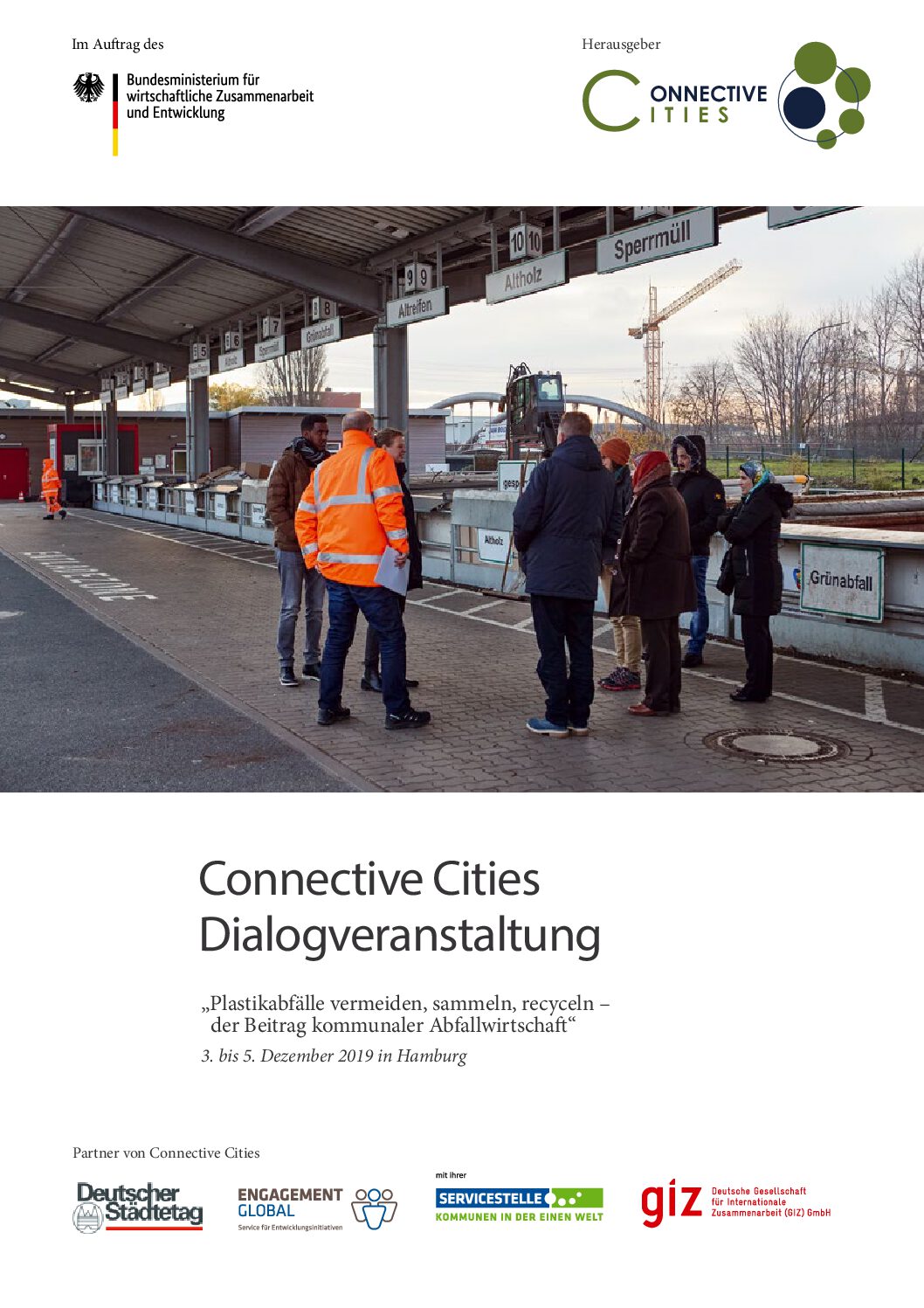
Almost 40 local practitioners from 13 cities, 9 countries and 4 continents intensively exchanged their experiences on the topic of ‘plastic waste’ and jointly developed solutions and project ideas. They followed the invitation of Connective Cities and the City of Hamburg to a dialogue event on ‘Avoiding, Collecting and Recycling Plastic Waste – The Contribution of Municipal Waste Management Systems’, which took place from 3 to 5 December 2019 in Hamburg.

At the end of the conference, eight concrete project ideas were developed which have great potential for implementation. The spectrum ranged from the establishment of an umbrella organisation for waste collectors in Mitrovica, the establishment of a recycling centre in Himara, the economically sustainable organisation of the collection of recyclable waste in Vushtrri, the automation of the recycling plant in Kandy, the development of a communication strategy for the recycling project in Quito, the establishment of waste separation at household level in Hawassa, the certification of sustainable shops in La Unión, to action planning for greater quality and competition in waste collection in Mogadishu.

The documentation describes in detail the format of the dialogue event, the good practices and results of the working groups as well as the planned further steps to implement the developed project ideas.

Call for participants: Municipal Response to the COVID-19 Pandemic

A series of virtual events will be organised with the focus on municipal response to the pandemic. This municipal knowledge-exchange activity aims at analysing and discussing practical examples from municipalities in MENA, Sub Saharan Africa and Germany. The event will thus provide a platform for learning how to plan, manage and evaluate effective measures to curb the impacts of the pandemic. It will also be possible to discuss individual questions with urban practitioners. Municipal representatives from both political and technical levels are invited to participate in the exchange.

Thematic focus of the events

1. Public health and municipal administrative processes:

All countries evoked the public health legal framework and the WHO guidelines to enforce measures to reduce the spread of the virus. Nevertheless, the pandemic has revealed shortcomings in municipal capacities to overcome its implications. Investing in digitalizing municipal administrative processes, IT systems as well as the overall healthcare infrastructure is being prioritized by many localities. Countries have also applied a combination of measures and technologies to monitor and control the situation at both the local and national levels. This session will focus on the possible strategies and measures implemented by public health and administrative municipal actors.

2. Municipal service delivery including water, sanitation and solid waste management:

Maintaining high standards of hygiene requires adequate provision of urban services such as water, sanitation and solid waste management which are key in combatting the spread of the virus. In many regions, the pandemic has heightened the existing shortcomings in the provision of these services. Some municipalities have provided temporal measures in order to improve the service delivery. Urban informal settlements in particular, are struggling with the situation, especially where social distancing rules cannot be effectively enforced. This session will focus on municipal service providers in the water and sanitation sectors.

3. Economic impact:

The pandemic has negatively impacted the economy on all levels. Most countries resolved to partial or complete lock down that resulted in paralyzing many economic sectors. It is in those cities that imposed the strictest lock down measures that the negative economic impacts are most apparent as per initial observations. A significant part of the labour markets in developing countries is informal and is comprised of daily wagers who have suffered immensely from the lockdown measures that impacted their livelihoods and ability to pay for services. These measures have also had a negative impact on the revenue stream for the municipalities. On the flip side, some economic sectors are witnessing growth. For example, many cities are relying on local manufacturing enterprises to produce medical equipment like masks, protective gear and ventilators which they would import in the past. This session will focus on possible measures to cushion the negative economic impacts of the pandemic on the local level.

More information: Call for Participants

Contact

If you wish to participate kindly email Dr. Muna Shalan (muna.shalan@giz.de) for MENA region, Sophia Kamau (sophia.kamau@giz.de) for Sub Saharan Africa and Alex Wagner (Alexander.Wagner@engagement-global.de) or Thiago Garcia (Thiago.Garcia@engagement-global.de) for German cities and counterparts