


Agadir municipality has pursued ambitious policies aimed at enhancing the quality of life of the city’s inhabitants, while protecting the environment and fostering sustainable development. The undertaken efforts targeted various key areas, in which the requirements and responsibilities for achieving environmental, social and economic sustainability were met.
Category: Urban mobility and public transport
Improving Efficiency and Effectiveness in the Provision of Water, Wastewater & Urban Mobility Services in Sub Saharan Africa
Between the 7th and 18th of September, 2020 in intermittent virtual sessions, about 43 participants from 24 cities and representing 7 African countries and Germany, congregated to share best practices and develop project ideas in the afore-mentioned areas
With the ever-increasing population and urbanization in most countries in Sub Saharan Africa, the demand for basic services also increases yet the municipalities and cities have not been able to match the supply to demand. A lot of challenges ail these sectors but there are efforts to sustainably sustain service provision.
The objectives of the dialogue event were to:
1. Facilitate exchange of experiences based on good practices of public service delivery among urban practitioners from municipalities in Sub-Saharan Africa and Germany,
2. Facilitate peer-to-peer advisory services to address the current challenges of public service delivery in the cities of the participants and create new knowledge,
3. Develop the capacity of the participants to analyse existing strategies and to formulate project ideas and envisaged solutions for efficient and effective public service delivery, and
4. Define future support measures to strengthen project development and implementation skills as well as ongoing exchange through the community of practice, Connective Cities.
The countries involved in this dialogue event were; Ethiopia, Ghana, Germany, Kenya, South Africa, Tanzania, Uganda, and Zambia. The event was a starting point for action planning for project ideas to be developed.
This report is the documentation of the virtual event.
Communication in the crisis: citizens, passengers & customers

As part of the series “International exchange of experiences: lessons learnt in the Covid-19 crisis”, a virtual meeting between various municipal actors took place on 28.10.2020. This time, the focus was on the question of how reliable and adequate information can be provided on time during a pandemic to all citizens, to public transport passengers or to customers of municipal service providers.
Good practices from Stuttgart (Germany), Belo Horizonte (Brazil) and Hebron (Palestine) were presented. These good practices provided impulses for an intensive exchange of expertise and development of new ideas. Other participants from Lebanon, Brazil, Kenya and Palestine also shared their experiences in dealing with the current Covid-19 crisis.
Our peer-to-peer consultation approach enabled to initiate discussions that provided an added value for all participants. In the end, new project ideas for further cooperation could be discussed and next steps suggested.
Improving efficiency and effectiveness in the provision of water, wastewater management and urban mobility services
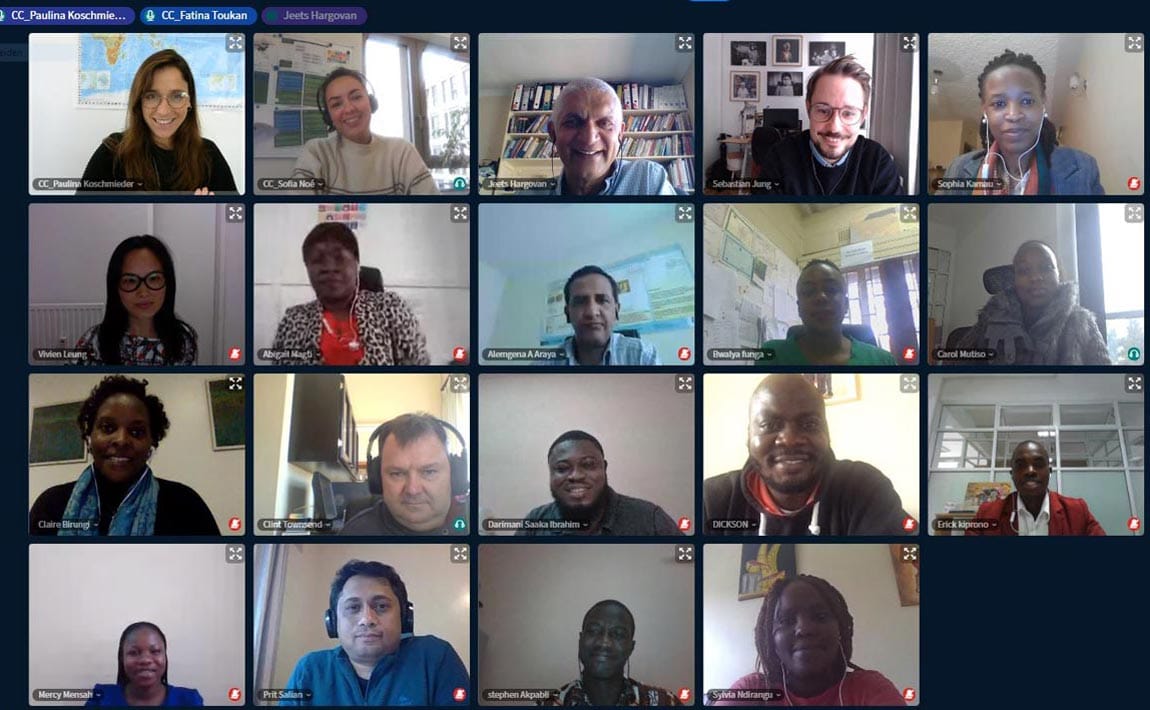
The Covid-19 pandemic has transformed what was known to be normal. In the new normal, Connective Cities has also resorted to virtual formats of the dialogue events. Between the 7th and 14th of September, in intermittent virtual sessions, about 43 participants from 24 cities and representing 7 African countries and Germany, congregated to share best practices and develop project ideas in the areas of water supply, wastewater management and urban mobility.
The rapid urbanization in Sub Saharan Africa has seen an increase in the urban population and subsequently the demand for basic urban basic services such as water, sanitation and sustainable transport. More than half of the urban population in SSA is yet to access these basic services.
This event provided a platform for utilities and cities to share on solutions to increase access to water supply, different approaches in management of wastewater and approaches in implementing sustainable urban mobility.
The conclusion of the event was crowned with six project ideas for Connective Cities to consider for further support in refining the concepts.
Transport for under two degrees – the way forward

The transport sector is the fastest growing source of greenhouse gas emissions at present. It accounts for approximately one quarter of global greenhouse gas emissions and hence figures prominently in efforts to transform the energy economy and protect the climate. Without a scaled-up global mitigation effort, it will not be possible to reach the climate targets of the Paris Agreement. A low-carbon transformation of the global transport sector is the next necessary step in the global energy transformation.
Germany’s Federal Foreign Office has commissioned the project “T4<2° – Transport for under two degrees”, a global foresight study on the decarbonisation and transformation of the transport sector to identify challenges and opportunities for a sustainable, low-carbon transport sector. The findings provide decision-makers with a clear vision and specific recommendations on how to achieve decarbonisation of the sector and orchestrate international efforts for a global transport system transformation.
C40 Mayors’ Agenda for a Green and Just Recovery

As the tragedy of the COVID-19 pandemic unfolds, mayors’ immediate priority is to face this unprecedented crisis and protect lives. At the same time, the city leaders who together established the Global Mayors COVID-19 Recovery Task Force are leading in taking the first steps towards recovery. They have committed to providing the swiftest and strongest possible rebound for their citizens and reaffirmed commitment to the principles of the Global Green New Deal — to protect our environment, strengthen economies and build a more equitable future – and reach out to other cities, youth, unions, business and civil society to join in this effort.
[…]
By taking a sustainable path at this critical juncture, by respecting science, fostering unity and embracing a spirit of innovation and purpose, cities will secure the best recovery they can and avoid the worst impacts of the climate crisis. Amid the devastation of this global pandemic, mayoral leadership has never been more important.
Nine principles for a green and just recovery are elaborated that can support cities’ recovery efforts.
More
Climate Resilient Urban Development in South East Europe

More than 40 local urban practitioners from 24 municipalities and 8 countries, fitting under the EU’s regional dimension of Eastern Partnership and Western Balkans, intensively exchanged their experiences/municipal expertise within 2 weeks of digital experience on the topic of “climate resilient urban development” and jointly developed solutions and project ideas. They followed the invitation of Connective Cities to an unprecedented and unique experience: Virtual Dialogue Event: “Climate Resilient Urban Development” on 8-19 June 2020.
It has been increasingly understood that rapid urbanization and climate risks mean greater vulnerability to urban development. Many cities worldwide face significant challenges arising from natural hazards. The Southeast European region is no exception, whereas the climate resilient urban development becomes a central pillar of local sustainability policies. Most of the countries in the region continue to face environmental and climate change challenges.
This event offered a virtual platform to discuss these challenges and supported municipalities in developing locally adapted solutions for climate challenges; in exchanging cities’ significant experience of developing successful possible options and good practises; in transforming innovative urban project ideas into digital solutions especially in the aftermath of the COVID-19 outbreak, as this latter continues to impact heavily the lifestyle at all levels including the sustainable urban development workers and it’s needed to adapt to more innovative and agile ways of working for future crises responses.
During the 2 weeks asynchronous and synchronous digital experience participants listened to inspiring Keynote presentations from leading European scientists and shared insights with peers in carefully curated Peer2Peer collaboration and exchange formats. They learned how to collaborate digitally and got acquainted with some tools, methods and the overall mindset Design Thinking.
The project has built a Network, an exchange platform of urban players, which provides a systematic access to practice-oriented solutions for sustainable urban development by facilitating change and providing mutual support.
Call for participants: Improvement of urban water supply, sanitation and urban mobility in Sub-Saharan Africa

“Redefining service provision in unprecedented times” – Intermittent sessions between the 7th and 18th September, 2020
The challenge of providing adequate basic services and infrastructure in African cities is central to the economic performance of cities, and their ability to provide a minimum quality of life to their citizens. The major services which cities provide include transport networks, water and sanitation connections, electricity, health, education, and a whole host of other ancillary services such as street cleaning,and the maintenance of public spaces among others.
Connective Cities invites municipal experts from sub-Saharan Africa and Germany to participate in the virtual dialogue series on “Improving efficiency and effectiveness in water supply, sanitation and urban mobility”. The aim is to strengthen the capacity of municipalities to provide sustainable public services through intermunicipal knowledge exchange and mutual learning.
The topic will be addressed by focusing on three specific questions:
- Water supply: Approaches and technologies to improve access to clean drinking water
- Wastewater management: challenges and technologies for an effective municipal wastewater management
- Urban mobility: effective and environmentally friendly transport management
The Covid-19 pandemic also calls for redefining how cities design their projects to safeguard against the negative impacts and also to remain resilient in the face of a pandemic in future.
Please contact us if you have any questions:
Sophia Kamau, Coordinator of the Regional Network Sub-Saharan Africa: sophia.kamau@giz.de
Alice Balbo, Connective Cities Project Manager for the German Association of Cities: Alice.Balbo@staedtetag.de
Cities SHIFT: Capacity building and networking for climate- and people-friendly mobility report

“With the pressing issues of congestion, air pollution, inequality, and climate change, the question is no longer if a sustainable and ecomobile transportation system will exist but when. Effective implementation can be realized by making an informed decision. This is imperative because you cannot manage what you do not know. This report demonstrates how the EcoMobility SHIFT+ tool can be adopted to assess and measure the transportation system of six cities in China, India, and Uganda. The EcoMobility SHIFT+ is a useful tool for local authorities to measure, assess, and act to improve ecomobility. Furthermore, evaluation and monitoring is an essential step in the process of developing sustainable urban mobility plans.”
Sustainable Urban Transport in Latin America

As the central importance of mobility to issues such as equity, climate impact and health is increasingly recognised, sustainable urban transport is becoming ever more relevant throughout the world. In Latin America and the Caribbean in particular, there are multiple urban mobility challenges to be addressed, requiring implementation of effective policies and innovative ideas. This publication will explore challenges and opportunities specific to the Latin American context, with the aim of providing guidance on how to improve mobility conditions for the region’s urban residents and contribute to sustainability targets.