Multidimensional: The COVID-19 urban restoration programme “Lviv tomorrow”

Ukraine, like most countries around the world, is strongly affected by Corona since March 2020. Individual cities experience little government support and are largely left to their own devices to combat and deal with COVID-19. Despite this challenge and only limited financial resources within the city budget, the city of Lviv managed to take quick and effective action.

The city, which is in northwestern Ukraine and has a population of about 750,000, established the “Lviv tomorrow” program to mitigate the negative consequences of COVID-19 and create the preconditions for improving the social, economic and cultural situation in the city. The program consists of 80 different projects, of which more than 50 already have been implemented.

An important pillar of the program is safety and health. The city of Lviv doubled the number of hospital beds available and set up its own COVID-19 testing laboratory. This allowed the number of COVID-19 tests to increase from 200-400 to over 3000 per day, speeding up the tracking of infected individuals and thus simplifying pandemic response.

The city also established new digital solutions that make it easier for the population to stay at and work from home. For example, a portal was created where the population can pay digitally for city services.

Especially the cultural sector was hit hard by the restrictions necessary to combat the pandemic. The city of Lviv is countering this by promoting open-air events and smaller cultural events, for example on balconies. This way, not only jobs in the cultural industry can be preserved, but also part of the life quality in the city can remain. In the uncertain times of the pandemic, cultural events are also a important psychological support for the population.

Another component of the “Lviv tomorrow” program is economic development. One project, for example, supports local food producers. In cooperation with supermarkets, food produced in Lviv is promoted and labeled with “made in Lviv” stickers.

With its extensive “Lviv tomorrow” program, the city of Lviv is taking action on many different levels to combat the pandemic and its effects. Not only the immediate aspects of the pandemic, such as the number of hospital beds, but also other areas of coexistence, such as cultural life, are included. Thus, not only acutely fighting the spread of Corona, but also creating a long-term perspective for the post COVID-19 city.

Contact:

Mr. Oleksandr Kobzarev
Director of the City Institute. Center of strategic planning in Lviv, Ukraine
o.kobzarev@city-institute.org

More Information:

LVIV TOMORROW. RESTORATION PROGRAM [pdf 11 pp.]

Interaktive Präsentation über Lviv (Only for those registered on the Connective Cities Platform)

COVID-19 implications in the Mediterranean

The brief cites regional examples from the South Mediterranean, sub-Saharan Africa and Germany on how governments and municipalities developed data dashboards and platforms and employed them in the pandemic response.

The policy brief concludes with an elaborate discussion on the implications and recommendations on how the current crisis can be turned into an opportunity for regional collaboration and promoting data-driven processes in the recovery from the pandemic.

Recommended policy actions include mapping the population that is in urgent need for vaccination, strengthening public health preparedness through bilateral and multilateral cooperation and creating Communities of Practice that contribute to promoting health equity.

Recommendations to promote data sets and data analytics in municipalities are also proposed, including the suggestion to integrate User-Friendly GIS software that is customized specifically for municipal use and written in the country’s native language, which could allow unlocking the geospatial system’s full potential.

Covid-19: The local implementation of vaccination strategies and related communication in municipalities

Since December 2020, municipalities around the world have been organising the vaccination of their citizens against Covid-19. Not only do they need to ensure that vaccinations run smoothly, but they also need to use innovative communication strategies to gain people’s trust and reach vulnerable groups such as older people and refugees.

On 22 and 25 March 2021, Connective Cities hosted a virtual response dialogue on Covid-19 vaccination and communication strategies, attended by eight municipalities and two municipal associations from Germany, Israel, Colombia, Serbia and Togo. The municipal representatives shared their experiences, gave each other tips and worked out solutions together for the best possible vaccination management.

They found that transparent, fast and trustworthy communication is a central component of a successful vaccination strategy. On the one hand, this applies to the internal communication between all actors involved in the vaccination campaign. Some participants wanted to use the idea of bringing together all relevant actors at a municipal round table directly in their own city. External communication with the population also plays an important role, especially with vulnerable groups.

Amman – strengthening social responsibility

With a prudent vision, the Greater Amman Municipality implemented several hard and soft measures to curb the impact of the pandemic on the local community using a three-pillars response approach: health, community, and environment. With the special focus on ‘community health and wellbeing’, the social development division fulfilled its role during the pandemic by implementing a myriad of measures under the umbrella of social services to the local community.

Municipal Response to COVID-19 in the Area of Governance

Approximately 50 participants from Georgia, Ukraine, Belarus, Moldova, Montenegro, Poland, Kyrgyzstan, Romania, Czech Republic, Estonia, Bosnia and Herzegovina, Argentina, Bolivia, Armenia, Azerbaijan, Albania and Germany (16 countries) participated in the virtual event of the knowledge-exchange series on Municipal Response to COVID-19 in the area of governance.

The event focused on exploring the role of e-governance in combating COVID-19. It reviewed how municipalities manage to ensure the supply of essential municipal services with the help of efficient e-governance systems. During the event various topics were discussed, such as:

  • Crisis management experiences and existing challenges
  • Exploration of how we can enhance or scale-up strategies to meet current crisis-induced demands.

The web-seminar explored the impact of the COVID-19 outbreak on municipal plans/strategies and municipal services, the actions and communication strategies deployed in response, and the cooperation of municipalities with national governments as well as international organizations.  

Program

 In this virtual event, Dr. Giorgi Khishtovani presented the methodology and results of the research on COVID-19 governance responses within the Connective Cities network. Thereafter, two good practices were shared from Tartu (Estonia) and La Paz (Bolivia). The moderated panel discussion covered the topics of e-governance and the effectiveness of ICT solutions at municipal levels during the COVID-19 pandemic. The participants were then encouraged to continue with the exchange on the virtual platform Connective Cities where other resources were shared in addition to the session outputs.

Presentations of good practices

Municipal Business and Governance Response to COVID-19: Tartu Case
Raimond Tamm, Deputy Mayor of Tartu, Tartu, Estonia.

Public Services and I-Government in COVID-19 Era
Roberto Zambrana Flores, La Paz, Bolivia.

Results

During this online exchange representatives from multitudes of municipalities exchanged their experiences and insights in the fields of municipal response in health, business, and governance. This virtual exchange brought together city leaders and field experts in health, business, and governance to discuss prevalent trends, opportunities, and challenges emerging, along with the development and reinvention of municipal responses amid the COVID-19 pandemic.

Being prepared in times of crisis

“We have distributed soap everywhere,” says Mishi Rama Mbete. The 48-year-old is sitting on a cardboard box in front of her mud hut, her hands folded in her lap. She wears the face mask correctly over her mouth and nose. “Corona is a terrible disease that has no cure yet. We are the medicine, our behaviour is, like when we wash our hands many times a day.” Mbete is one of 30 Community Health Volunteers from the informal settlements of Majengo and Mzambarauni who, on behalf of Participatory Slum Upgrading Project (PSUP) and its collaborative partner, the Community-based Organization Shining Hope for Communities (SHOFCO), tackled the initial stages of the COVID-19 outbreak, going door-to-door for weeks in awareness campaigns. She, among others, distributed hand sanitizers and soap, explaining the importance of washing hands properly, wearing a facemask, keeping social distance when possible, and recognising the symptoms of COVID-19 in time. Suspected cases of infections were referred to government facilities for further tests and follow-ups.

The awareness campaign is part of an emergency response package that PSUP and SHOFCO launched at the onset of the Corona outbreak in Kenya in March 2020. The aim, from the very beginning, was to prevent a looming disaster in the slums. No one was to be left behind during the pandemic. Together with the County Government of Kilifi and the communities in the PSUP project region, both partners set up 20 handwashing stations, maintained by men and women from the communities for a small additional income, to protect local people from the virus. The Community Health Volunteers were trained by the County Government’s Department of Health to use their expertise to conduct education and provide up-to-date emergency assistance.

More

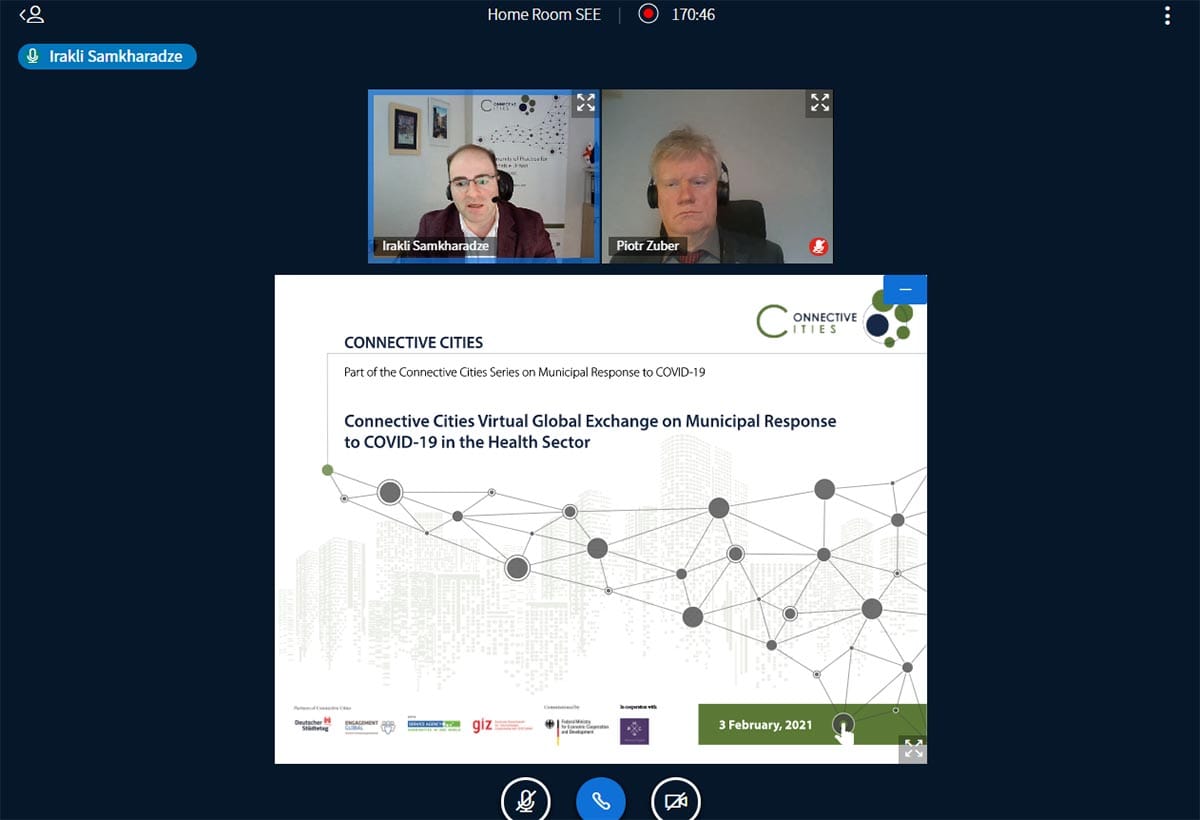
Municipal Response to COVID-19 in the Health Sector

Web seminar held February 3rd  from 11:45 to 14:30 (CET) was part of a series from the ongoing project “Research of good practices and moderation of virtual events on the subject of health, business and governance at municipal level in times of COVID-19.” It brought together approximately 40 municipal representatives and 10 experts from all around the world in an attempt to identify good practices in health responses employed amid the pandemic. Representatives from Austria, Azerbaijan, Armenia, China, Colombia, Czech Republic, Georgia, Germany, Moldova, Montenegro, Slovenia, Serbia, Ukraine, Kyrgyzstan and North Macedonia have gathered to discuss local insufficiencies and shortcomings of health sector during the pandemic.

Findings of research on challenges and solutions implemented in network cities in the health sector were presented, as well as specific cases of municipal responses to COVID-19 in healthcare from Chisinau (Moldova) and Bogota (Colombia) were brought to attention of attendees. During the event participants had a valuable opportunity to discuss specific cases, share their own insights on the topic, and lay out the framework for future cooperation. The event ended with an active panel discussion between municipal representatives and field experts on the topic of COVID-19 vaccination and the challenges of combating the misinformed anti-vaxxer movement. The participants reviewed how cities might plan their vaccination process and elaborate corresponding communication strategies in order to ensure the vaccination of a sufficient proportion of the population.

Interview with Ahmad Zeyad: Public Health and Crisis Management

Avoid bureaucracy, gather verified urban data and rely on your own strengths – watch through Ahmad Zeyad what it took to reduce infection rates in Amman, Jordan.

More: https://youtu.be/c8j22Qo_IkI

Join us and watch a special series of videos and podcasts that will show how to overcome a crisis from many different points of view. More videos, podcasts and interviews on our COVID-19 page.

Municipal Response to COVID-19 for Sustainable Urban Development in Southeast Europe and Caucasus

The COVID-19 pandemic tested the robustness and resourcefulness of mostly all municipal services, from transportation and waste management to recreation and communication, pushing cities to reinvent new ways to serve their citizens. Besides, pandemic-centered protocols set new behavioral patterns – many of which were quite stressful for urban economies. Others, on the contrary, made both city leaders and citizens rethink the status-quo regarding sustainability and resilience. They created the opportunity for a green and circular economy to determine the mood of the recovery. Thus, a deep and better understanding of a city’s systems and operation is required in order to move towards sustainable development and greater resilience. If cities manage to learn from the COVID-19 crisis and proactively apply long-term prevention and risk reduction approaches, they will meet future emergencies better prepared or avoid some of them.

The following report summarizes the study on municipal response to COVID-19 pandemic. The study was conducted in September 2020, more than half a year after the global emergency was announced. It covers cities of Albania, Armenia, Azerbaijan, Belarus, Bosnia and Herzegovina, Georgia, Kosovo, North Macedonia, Moldova, Montenegro, Serbia and Ukraine.

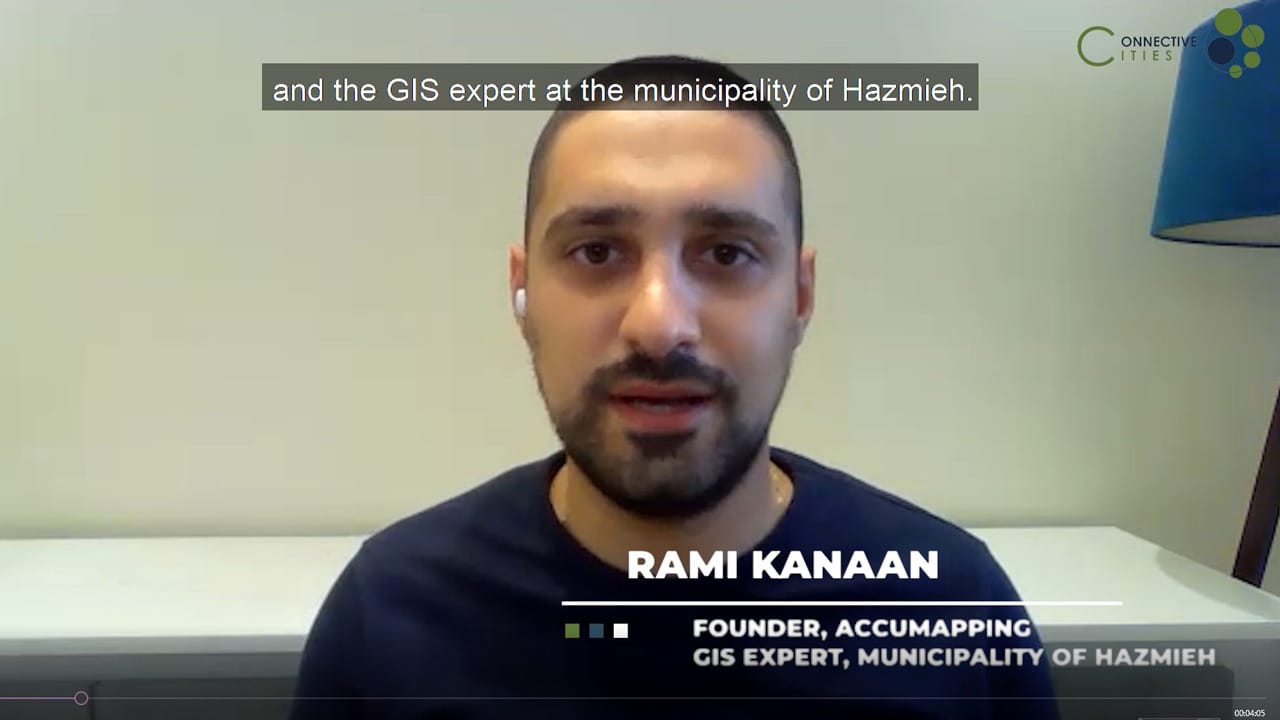
Interview with Rami Kanaan: Digitalisation and Public Health

Hazmieh, Lebanon, a city located at the entrance of Beirut. Rami Kanaan, a proud Lebanese, told us how to control infection chains to prevent the virus from spreading and how can police and ambulances profit from this.

More: https://youtu.be/WGlsNTODLbc

Join us and watch a special series of videos and podcasts that will show how to overcome a crisis from many different points of view. More videos, podcasts and interviews on our COVID-19 page.