Climate Proofing Urban Development

The impacts of climate change include extreme weather events such as heavy rainfalls, severe thunderstorms, prolonged droughts and heat waves. These impacts pose major challenges for cities around the world. Although climate change is a global challenge, adapting to its impacts is largely a local process.

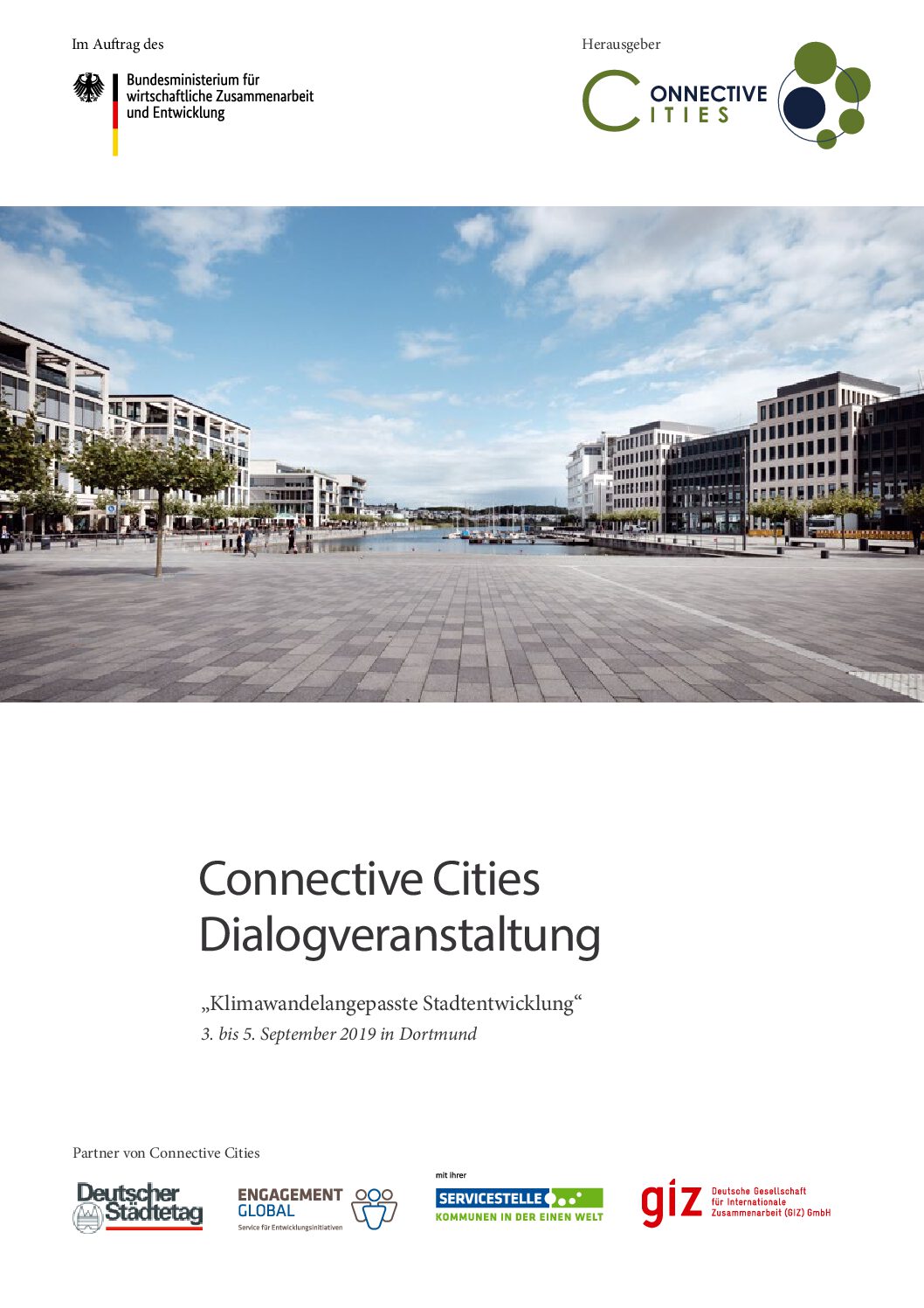
Almost 30 local practitioners from 12 cities, 10 countries and four continents accepted the invitation of Connective Cities and the City of Dortmund to a dialogue event on the topic of ‘Climate proofing urban development’, which took place from 3 to 5 September 2019 in Dortmund, Germany. This report documents the discussed good practices, solution approaches and developed project ideas.

Climate Resilience and Urban Development

Many cities in the Latin American region have been pioneers in the implementation of environmental measures and policies, as well as in resilience building and adaptation of their territories to the incre- asing effects of climate change. Planning for the future is key for the well-being of our communities, and we need to continue working with and for them in order to mitigate and adapt to the impact that climate change will continue to have on our territories in the coming decades.

This peer-learning note summarizes good practices of Latin American cities with a focus on four different thematic areas: risk assessment, comprehensive planning, finance, and citizen engagement. The practices were discussed during our ConnectiveCities peer-learning event hosted by the city of Niteroi, Brazil between November 26-28, 2019.

More information: 

• Read the Peer Learning Note 26 about Climate Resilience and Urban Development in English, Spanish, or Portuguese.
Short documentation with all presentations and pictures of the events

Climate just and climate proof urban development

As a prelude to the new learning process of Connective Cities in Latin America, the dialogue event “Climate just and climate proof urban development” took place in Niterói, Brazil, from 26-28 November 2019. Cooperation partners of the event were the city of Niterói and UCLG Learning.

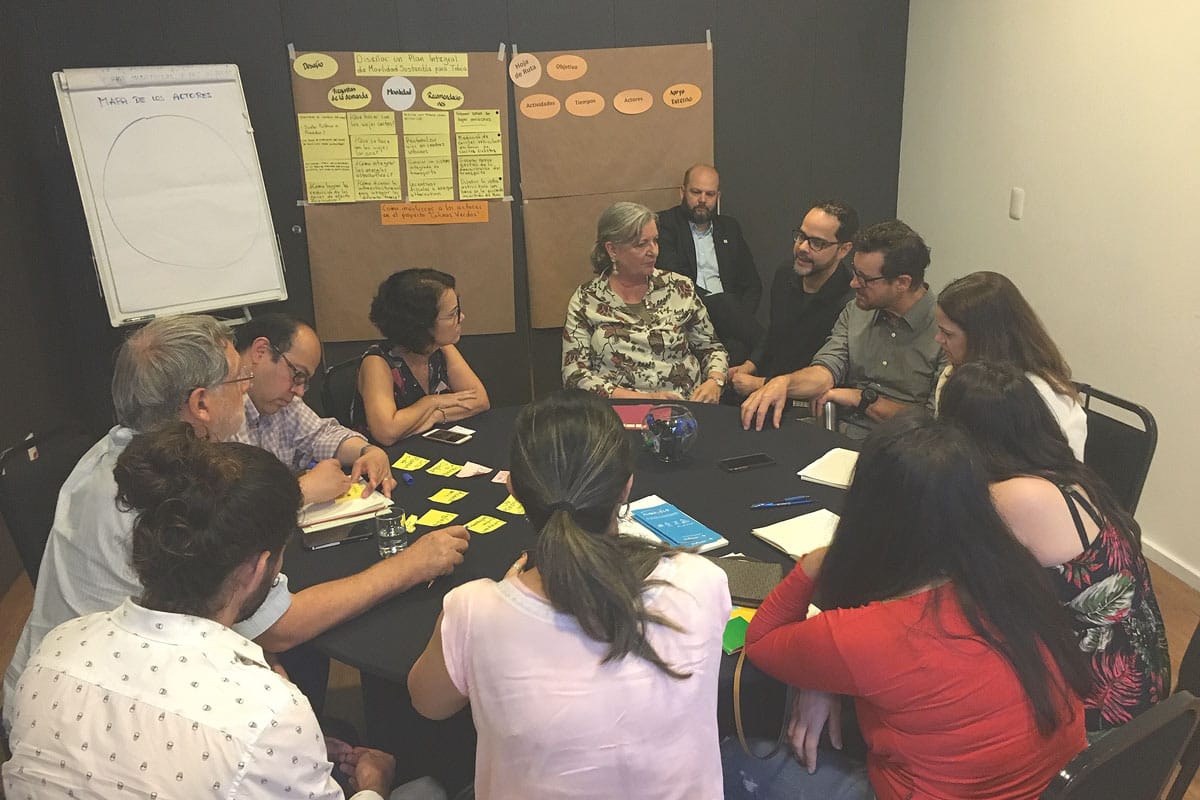
The 32 participants in the event, mainly local practitioners, came from 17 cities in six countries: Brazil, Germany, Ecuador, Colombia, Argentina and Mexico. All participants work in their cities or projects on the topic of climate resilience/climate adaptation in the context of sustainable urban development. The aim of the event was to exchange experience and knowledge among local practitioners on the subject, to get to know good practices and to give mutual advice to colleagues, as well as to develop project ideas for further processing in subsequent events.

During an excursion, the group first got to know some of the current and completed projects of the Niterói Municipality in situ, and then gained further insights during a meeting with the Mayor Rodrigo Neves.

15 Pathways to localise the Sustainable Development Goals

This publication illustrates how the 15 pathways of the Basque Declaration can be used by towns and cities to localise the Sustainable Development Goals (SDGs).

In this publication, the 15 pathways of the Basque Declaration are illustrated with stories taken from the Transformative Action database of the Sustainable Cities Platform. Each of these stories are former applications to the Transformative Action Award 2017-2019 and have been reviewed by a jury of experts, which includes representatives from the European Committee of the Regions, the European Investment Bank, UNESCO Etxea, the City of Aalborg (Denmark) and ICLEI Europe.

The purpose of these stories is to provide local governments and other local stakeholders with inspiration for action, rather than the formulation of yet another action plan. The examples also give insight into how to implement the goals using an integrated approach across sectors and departments. For each story, the most relevant pathway and SDGs are indicated, based on an independent assessment by ICLEI Europe. They show the diversity of approaches across topics, geographical locations and local cultures.

The Power of Cities

“The World Health Organization (WHO) has identified urbanization as one of the key challenges for public health in the 21st century. It is typically discussed in negative terms, including infectious outbreaks, unhealthy lifestyles and environmental threats. Yet cities offer significant opportunities to improve public health through health-enhancing policies and actions. […] City leaders are key allies in delivering national public health objectives among large parts of the population. City leaders have the means, opportunity and obligation to protect the health and well-being of their people by defining priorities, uniting stakeholders around common goals, and ensuring accountability for outcomes. City leaders’ commitment is important not just for the health of cities, but for global health as a whole. […] Cities are the main implementation sites for national health policies and programmes – without their support, global targets are unlikely to be achieved. This report is a call for city leaders to rise to the challenge and show the world how local action can help solve global health problems.”

Resilient cities, thriving cities: The evolution of urban resilience

“This report uses the decade-long experience of the Resilient Cities Congress series as a proxy to track the evolution of the global resilience debate over the last ten years, creating a solid base to build the next decade of bold action.
It explores a variety of resilience approaches; for example, how multi-stakeholder planning has contributed to finance and boosted local resilience, or how leveraging nature-based solutions has enabled cities’ adaptation to climate change and improved people’s quality of life. The report also provides successful examples of social cohesion benefitting physical resilience, especially in informal settlements.”

Understanding Infrastructure Interdependencies in Cities

“Modern urban infrastructure and their systems of operation are highly interdependent. They are formed of multiple connections, feedback and feedforward paths, and intricate branching where services or information are transferred across city sectors. This means that if one system fails, it can have cascading impacts on other systems. Climate change can compound these impacts significantly. Some systems may be directly affected by climate change events – such as roads during flooding. Other systems may be affected indirectly, such as the health sector and the financial sector if there are power outages. The interdependencies of city systems combined with climate impacts can lead to a ripple effect of disruptions. Understanding infrastructure interdependencies and critical failure points is therefore vital to achieving long- term climate resilience across a whole city.”

The Future of Asian & Pacific Cities

A sustainable future occurs when planning lays a foundation; resilience guards against future risk; smart cities deploy the best technology for the job; and financing tools help pay for it all.

The report focuses on four essentials that cities must get right. Urban and territorial planning, strengthening resilience to future risks, supporting the effective interplay between people and technology, and financing tools, all of which are essential to deliver sustainable smart cities in our region. With three to five future policy pathways per chapter, the report offers ways to seize these opportunities and realize sustainable urban development by 2030. Regional cooperation and strong partnerships among all interested parties will be essential to pool expertise, accelerate progress and deliver the integrated approach needed.

Cities leading the way

Cities are already leading the way with ambitious plans to accelerate action on climate change. With more political will, community support and collaboration, cities can make an even greater contribution to securing a climate safe future.
The seven cities showcased here report that the planning process is an opportunity to engage internal and external stakeholders on the level of ambition needed and the roles different players can take. Co-creating the vision for the city and collaborating on the development of solutions ensures stakeholders have ownership of the process, support the long-term vision and take action themselves.
While each city has taken a different approach to the style and structure of their climate action plan/s, all of them demonstrate ambition and accelerated delivery as core objectives. The approaches highlighted in this report are intended to inspire other cities across the C40 Cities Climate Leadership Group and beyond to follow suit and play their part in delivering the objectives of the Paris Agreement.
Rather than attempt to summarise each city’s plan, the case studies presented in this report highlight a particular aspect that could be of interest to other cities.

Localising the 2030 Agenda through Integrated Urban Development

Action-oriented studies show that the 2030 Agenda will only be successful if implemented at the urban level and together with urban actors. In fact, cities – as actors and places – are crucial to achieve two thirds of all SDG targets. This insight and the principle of interconnectedness underpin the urgency to follow integrated approaches for sustainable urban development to break down barriers between sectors and stakeholders, and between institutions and levels of government. […] The publication describes five development projects implemented by the Deutsche Gesellschaft für Internationale Zusammenarbeit (GIZ) GmbH on behalf of the German Ministry for Economic Development and Cooperation (BMZ). These projects applied an integrated urban development approach that led to comprehensive and sustainable results in urban areas thereby contributing to the implementation of the 2030 Agenda.