Towards the Just City in Kenya

In the next 25 years, Africa’s urban population is set to double. By 2040, the majority of Africans will be living in cities. There are numerous reasons for this: climate change, violent conflicts and the hope of finding work or education, although this list could easily be extended. Urbanisation thus constitutes one of the greatest transformations facing Africa in the 21st century.

Despite the diversity of the African continent, however, they are so far mostly “unjust” cities that people are moving to. The majority live in informal settlements and work under precarious conditions, mostly in the informal sector, without employment contracts and social security.

Towards the Just City in Kenya is the first publication of its kind that explores the conceptualisation and application of the “just city” concept in Kenya. The authors explore the concept from various dimensions, namely:

  • Conceptualisation of the just city in Kenya.
  • Locating the just city in the constitutional, policy, legislative and institutional context.
  • Discussion of spatial justice in the context of planning and housing; and
  • Interrogating practical ways in which cities express injustice and how these can be practically addressed, with examples from the public transport sector.

The study offers recommendations on how the just city concept can be realised in Kenya, looking specifically at urban institutions, citizens’ rights, housing policies and urban public transport systems.

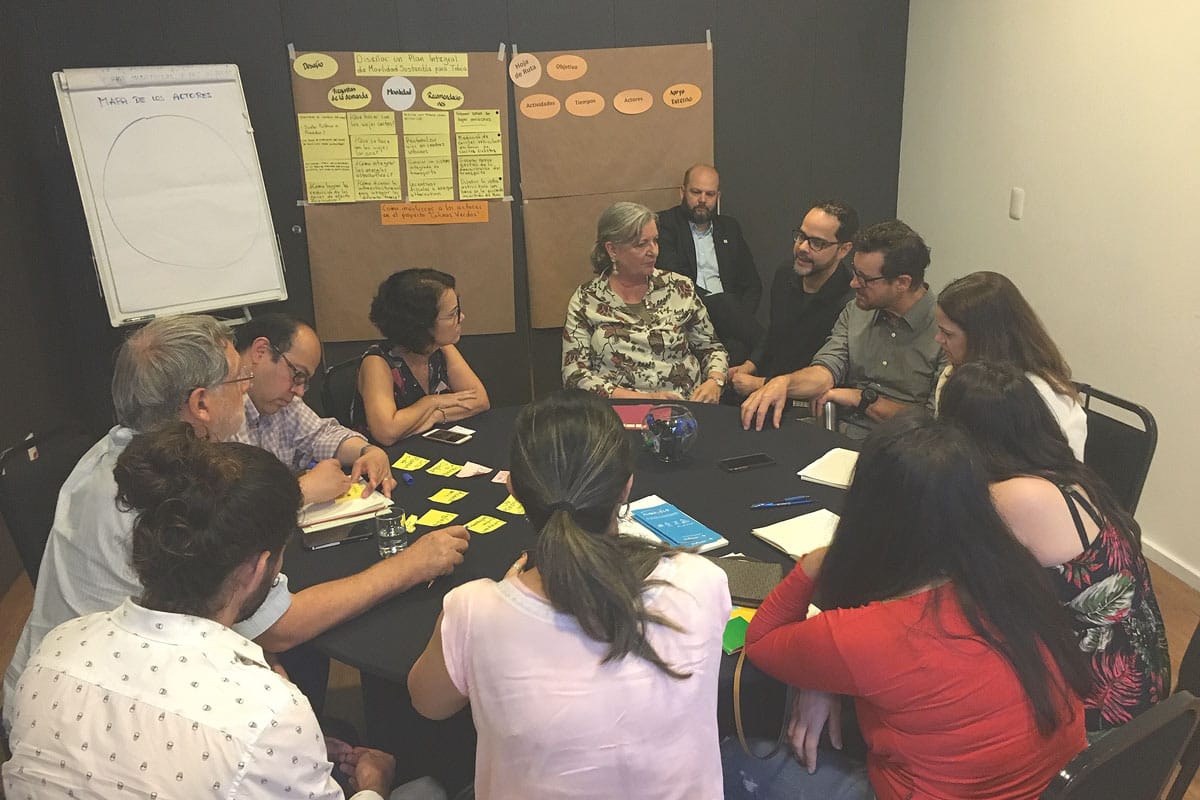
With its just city project, FES Kenya and its partners facilitate dialogues through working groups which bring together civil society, trade unions, Members of County Assemblies, Government representatives, and academia working in urban centres of Kenya with the objective to jointly work for a just city.

Sustainable and resilient, regional and intermunicipal land management

The three sustainability dimensions “ecologically sound”, “economically successful” and “socially just” are always in focus in municipal urban development projects. This also applies to municipal land management. The integration of these three aspects and the resilience factor in land use planning and zoning strategies as well as in existing development under constantly changing conditions is one of the main tasks of municipal experts. Conflicts of objectives and interests often arise, which are not always easy to solve.

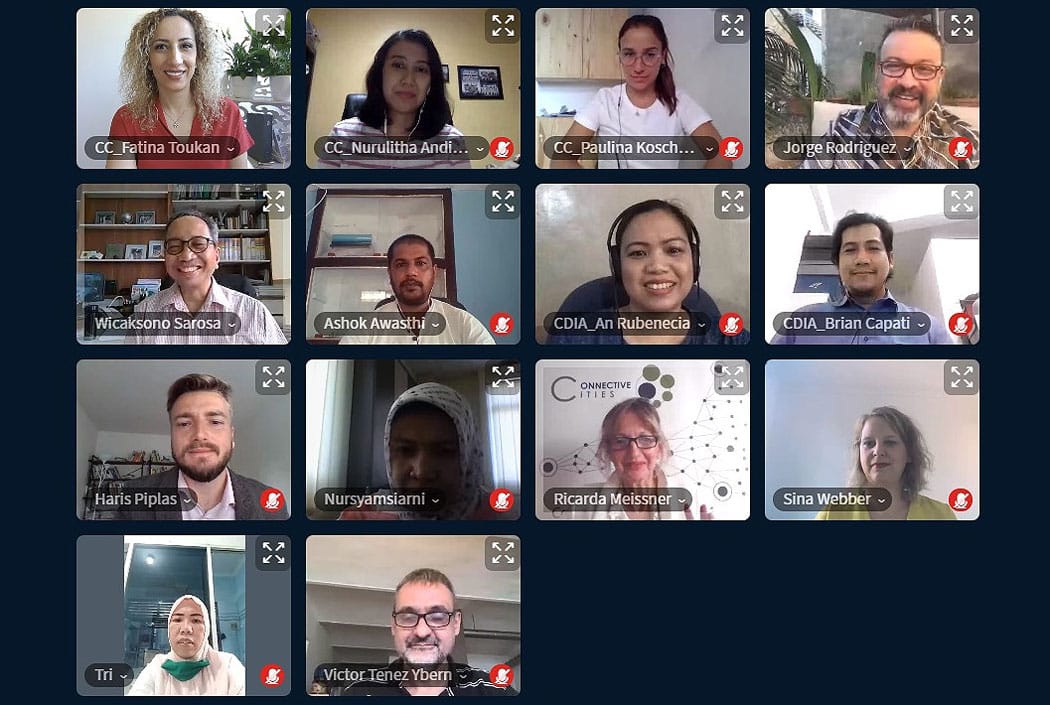
Nearly 30 municipal practitioners from 14 cities, 7 countries and three continents intensively exchanged their experiences on the topic of “sustainable and resilient, regional and intermunicipal land management” and developed joint approaches and project ideas. They had accepted the invitation of Connective Cities and the city of Trier to join the virtual dialogue event, which took place from November 18 to 20, 2020.

Starting with an exchange of experiences on good practices and projects in the cities, challenges in implementation were identified and finally two project ideas were developed for Amman (Jordan) and Rostock (Germany), which may lead to an improvement of the respective strategies and implementation plans in this thematic area.

Local Development Program for the City of Agadir in Morocco

Agadir municipality has pursued ambitious policies aimed at enhancing the quality of life of the city’s inhabitants, while protecting the environment and fostering sustainable development. The undertaken efforts targeted various key areas, in which the requirements and responsibilities for achieving environmental, social and economic sustainability were met.

The Value of Sustainable Urbanization

“The world we live in has been transformed in a manner not witnessed in recent times. In a rapidly urbanizing and globalized world, cities have been the epicentres of COVID-19. The virus has spread to virtually all parts of the world; first, among globally connected cities, and now, through community transmission and from the city to the countryside.
The World Cities Report 2020 shows that the intrinsic value of sustainable urbanization can and should be harnessed for the wellbeing of all. The report provides evidence and policy analysis of the value of urbanization from an economic, social and environmental perspective, including the unquantifiable value that gives cities their unique character; and also explores the role of innovation and technology, local governments, targeted investments and the effective implementation of the New Urban Agenda in fostering the value of sustainable urbanization.”

Call for solutions until 9 November: #SolutionsForCities

Worldwide cities face similar challenges. This has become even more visible through the outbreak of the Covid-19 pandemic. The pandemic situation has generated inspiring creativity and solidarity. How can we transfer innovative solutions from the pandemic to the future? How can we promote sustainable urban development for the common good? To tackle these questions, the German Federal Ministry of the Interior, Building and Community initiated the international, digital ideas competition #SolutionsForCities.

In a two-day virtual Challenge Lab, current challenges of cities were identified together with German Smart City model projects and with partner cities of the International Smart Cities Network (ISCN). These challenges will be published on the platform www.solutionsforcities.de with the Call for Solutions from October 28th.

Call for Solutions from October 28th to November 9th 2020

The Call for Solutions is a global call for the submission of digital solutions for the common good. It is aimed at international companies and start-ups, as well as local authorities, research institutions and projects, and civil society. The Call for Solutions opens on October 28th 2020 during the Smart City Day at the Smart Country Convention 2020! Until November 9th 2020, digital solutions can be submitted on the platform www.solutionsforcities.de as response to the published urban challenges.

Scalathon from November 23rd – 25th 2020

After the Call for Solutions, the participating cities or municipalities select the most suitable solutions for their challenges and compete in the Scalathon as a team with the respective solution providers.

The Scalathon is the core of the ideas competition and will take place from November 23rd – 25th 2020. During the three-day virtual workshop, selected solution providers will work closely together with the respective city or municipality, further develop the digital solutions and adapt them to the concrete local challenges.

Green Urban Infrastructure in Asian Cities

From August 3rd until August 14th, 2020 around 30 urban practitioners from 6 Asian Cities came together virtually to exchange their experiences and expertise in the field of Green Urban Infrastructure. Especially challenges in waste management and water sanitation were discussed intensively, as they represent pressing issues for many Asian cities.

The aim of the workshop was to further develop existing project ideas by discussing arising challenges and trying out new methods to find new perspectives and approaches to urban planning. The event was a follow-up to the dialogue event in Bandung, Indonesia in November 2019.

Due to the restrictions imposed on all of us by the Covid-19-pandemic, the event was conducted virtually by using the Connective Cities Platform. To ensure an enriching learning experience, the event took place over two weeks and included synchronous workdays with various keynote presentations as well as asynchronous days on which the participants could work on their project ideas at their own pace.

Six projects from Indonesia and Nepal were presented and further developed (see presentations).

Settlement Profiling Tool

The Settlement Profiling Tool, developed by UN-Habitat in partnership with UNHCR, sets out the framework for preparing cross-sectoral spatial profiles which are intended to help inform urban development policy decisions.

A settlement profile is not a plan. It is instead a repository of spatial information that can be used to inform planning and development. The information is mapped and can include broad demographic data, from information on mobility and infrastructure to environmental studies. By going beyond analysis to provide recommendations or outlined scenarios that are relevant to policy, settlement profiles help establish political priorities and entry points for discussions with partners, communities and local governments about what to plan, where and when.

This settlement profiling tool is particularly focused on situations where protracted displacement has occurred, and supports a shift towards prioritising development interventions. The profile outputs should provide a concise and useful framework to help target investment in recovery situations. A settlement profile is intended to be used in conjunction with existing policies, organisational mandates, technical guidelines and studies to further support humanitarian actors. In particular, this includes UNHCR operations (e.g. country-level coordinators) when operating in urban contexts, which require a multi-faceted understanding of the specific conditions, dynamics and systems unique to urban and urban-like areas.

Niteroi Resilience Plan

Niteroi is a Brazilian coastal city surrounded by hills just outside Rio de Janeiro. With its approximately 500,000 inhabitants, Niteroi’s economy focuses mainly on commerce and services. In 2010, the city had the highest Human Development Index in the state of Rio de Janeiro and the seventh largest among Brazilian municipalities. Also, it is the first of the state concerning sanitation performance.

As a coastal city, Niteroi has at the same time, many tourism possibilities with extraordinary beaches, but also, problems related to sea level rising and eventual rough seas. Climate change has also contributed to an increase in droughts and wildfires.

The city is located between the sea and the hills and in the past decades, with the increasing of the city combined with a non-structured urbanistic plan, most of the hillsides were irregularly occupied by low-income families in a massive way. As the result of this situation, Niteroi has areas occupied by vulnerable people where there are significant risks of land sliding.

In April 2010, more than 240 people died in landslides, most of which occurred on the hills surrounding the city. After that, many preventive actions were made, aiming to reduce the number of accidents and deaths, what generated excellent results.

Finally, the municipal government has developed a Resilience Plan aiming to strengthen the direct and indirect actions of the Niteroi Civil Defense. It has had a great importance and a strong impact in the city. The plan was finalized and launched in December 2019 and its implementation has already started.

Cities Policy Responses

This note was developed by the OECD Centre for Entrepreneurship, SMEs, Regions and Cities (CFE) in collaboration with the OECD Working Party for Urban Policy and the OECD Champion Mayors Initiative for Inclusive Growth. It is an update of the earlier versions released on 27 March and 13 May, which expands the examples of measures taken by cities to respond to COVID-19 and recover from the economic and social crisis. The note provides analysis on issues related to the economic, social and environmental impacts, lessons learned in terms of digitalisation, mobility, density, urban design and collaborative governance, and action-oriented guidance to build back better cities, building on previous work on urban resilience. Short and medium term responses provided by cities are clustered around six categories: i) social distancing; ii) workplace and commuting; iii) vulnerable groups; iv) local service delivery; v) support to business; and vi) communication, awareness raising and digital tools. The note also includes updated information on how cities are progressively exiting the lockdown.

German-Turkish Municipal Partnership Conference

In cooperation with the German Association of Cities and Towns (Deutscher Städtetag) together with the Association of Turkish Municipalities (Türkiye Belediyeler Birliği, TBB) and with the support of the city of Istanbul (Istanbul Büyükşehir Belediyesi, IBB), the German representations in Turkey are planning a two-day German-Turkish municipal partnership conference in Istanbul in the second half of 2020. The municipal partnership conference is intended to identify mutual issues and challenges as well as successful approaches for project cooperation.

As a kick-off to the German-Turkish municipal partnership conference, a virtual pre-conference will take place from 15 to 18 June 2020. Topics of the technical workshops are:

  1. Digital City
  2. Sustainable urban development
  3. The role of municipalities in protecting marginalised groups and refugees in the COVID 19 crisis
  4. Youth exchanges in municipal partnerships

Please refer to the conference announcement (in German) for further information on registration, programme and technical requirements.