


For Dresden and Brazzaville, urban gardening is a shared field of interest with future potential. Following a dialogue event by Connective Cities and reciprocal visits, the two cities and their partner institutions made use of a virtual exchange format to explore various possibilities for cooperation in the field of urban gardening – as part of their push for sustainable urban development.
Category: The social city
Cooperative Urban Development – Open Society and Normativity in Urban Development

Close cooperation between municipalities and civil society leads to improvements in the quality of the procedures used for planning urban projects and the subsequent outcomes, too. Demonstration areas and model projects create opportunities for further exploring new forms of cooperation in the field of urban development and for making headway in terms of co-designing inclusive and liveable cities.
An international event by Connective Cities and the City of Mannheim has enabled professionals with expertise in bottom-up planning approaches to meet with municipal representatives to discuss matters of cooperative urban development. This exchange was embedded in an urban development symposium dedicated to analysing the demands of a contemporary urban planning culture – an event hosted by the City of Mannheim on the site currently occupied by Germany’s National Garden Show (Bundesgartenschau).
The participants brought with them a wealth of expertise and manifold examples of practical experience from 15 cities worldwide. Municipalities from Central and Latin America, North and West Africa as well as all of Europe sent their representatives along. Presentations by Berlin and Amsterdam raised awareness of the importance of a bottom-up approach. Other issues addressed included the requisite modalities for safeguarding projects for pioneer users in the long term and ways of ensuring socially equitable usage given the backdrop of speculation and gentrification. Examples from projects in Aachen, Freetown and Juárez also conveyed the importance of being sensitive to local conditions and of acknowledging the local population’s concerns.
Dream City Festival in Tunis

The Dream City Festival is held in the Medina and downtown Tunis bringing together artists from Tunisia, the MENA-region, Africa and Europe, the event creates a unique melting pot of artwork and visions of urban futures. Over time, the festival became an important part of Tunis cultural life and an interesting element in urban development.
Strengthening the resilience and capacity to rebuild cities and critical municipal infrastructure in times of war

On 31 January 2023, the digital kick-off event of the working group “Resilience in times of war” took place. Under the theme “Strengthening resilience and capacity to rebuild cities and critical municipal infrastructure in times of war”, the event enabled an exchange between a total of 62 municipal representatives from Ukraine and Germany on good practices, common challenges and possible solutions.
With special regard to municipal cooperation in the field of energy efficiency and housing, Mr. Günter Burger, personal department of the Lord Mayor of the city of Freiburg im Breisgau, gave a technical input. Together with its partner city Lviv, the city of Freiburg is planning a model building for housing internally displaced persons and people who have lost their living space in the city. After an initial test phase in Lviv, the housing units should also be able to be used in a modular fashion in other cities. In the future, the materials, mainly wood, will be produced in Ukraine to create not only housing but also jobs. Construction of the up to three-storey wooden buildings is scheduled to begin in March of this year – with subsequent testing of implementation in other areas. So-called power blocks, which have already been delivered from Freiburg to Lviv in recent months, could be used for the power supply to improve energy security in general.
Voices from Connective Cities – Glezan Municipality

Glezan municipality in Algeria is strategically located at the center of the country, serving as a linkage between the eastern and western part as well as the northern and southern parts. In this interview, the representative of the municipality (Mr. Ismain ben Mohammad) describes the municipality’s achievements in promoting energy efficiency and solar energy. Mr. Ismain also describes the municipal efforts in partnership with local civil society organisations to address the needs of the local communities in underdeveloped regions, that are known as ‘shadow regions’. Furthermore, he values the benefits of peer learning from Connective Cities network members, and describes the community as a large space that has accommodated everyone.
Watch video at YouTube:
Urban development for all in Vienna

In the field of gender planning, Vienna is accorded a top position at the European level regarding both the conceptual depth and thematic width of its activities. This is also evidenced by the great international interest in the experience “made in Vienna”.
Leave no one behind

As part of its support during COVID-19 pandemic, the Municipality of Mionica established a volunteering center to support elderly people in the municipality during the pandemic.
Social housing for the socially disadvantaged

The capacity of the municipality of Plovdiv to provide adequate housing for the socially vulnerable is insufficient. Through the construction of social housing, socially disadvantaged people are now supported in the municipality of Plovdiv and the project itself is expected to promote the integration of the targeted people into society.
Envisaging the Future of Cities

Urbanization is intertwined with several existential global challenges: Cities do not exist in isolation from global challenges. The emergence of urbanization as a global megatrend is intertwined with the existential challenges that the world has faced in the last 50 years, including climate change, rising inequality and the rise in zoonotic viruses with the latest being the novel coronavirus pandemic, which triggered the worst public health crisis in a century and the worst economic recession since the Great Depression. These challenges will in different ways, leave their imprints on the future of cities.
In UN-Habitat’s new World Cities Report 2022 – Envisaging the Future of Cities, three scenarios, or three paths were identified, that the world’s cities could take at this critical juncture.
- In the worst-case or “high damage” scenario, we assume that policy-making and governance will become even weaker and more ineffective. The destructive effects of the pandemic, climate change, inequality, poverty, and long-running conflicts, if not adequately addressed, will have disastrous consequences for cities in both developed and developing countries, though the latter would suffer most because of existing vulnerabilities. If 80 per cent of the economic damage inflicted by COVID-19 persists for a decade, then the number of people living in poverty could increase by more than 200 million by 2050.
- The middling, or “pessimistic scenario”, foresees a reversion to the status quo before the pandemic. This business-as-usual approach would be characterised by exploitation and exclusion of informal sector workers, systemic discrimination of the urban poor, unimaginative policies and poor implementation on the climate crisis, public transport, or urban regeneration programmes and renewal. Cities could be locked into cycles of poverty, poor productivity, unhealthy living conditions and become inequality traps for decades.
- The report, however, also envisages an optimistic future. Governments and donors would invest in urban development sufficiently to create just, resilient, healthy, and prosperous cities everywhere. By 2050, there could be 260 million people lifted out of poverty compared to the pre-COVID baseline. National governments would embrace peace and diplomacy to resolve their differences rather than pursuing military action, avoiding drastic global economic consequences such as those inflicted on the supply of food and energy by the war in Ukraine. Governments would manage the remainder of the COVID-19 pandemic competently, balancing health outcomes and economic recovery, and thus smoothing out global supply chains. They would also prepare adequately for the next pandemic.
Frankfurt (Oder) – Slubice: Together against the pandemic
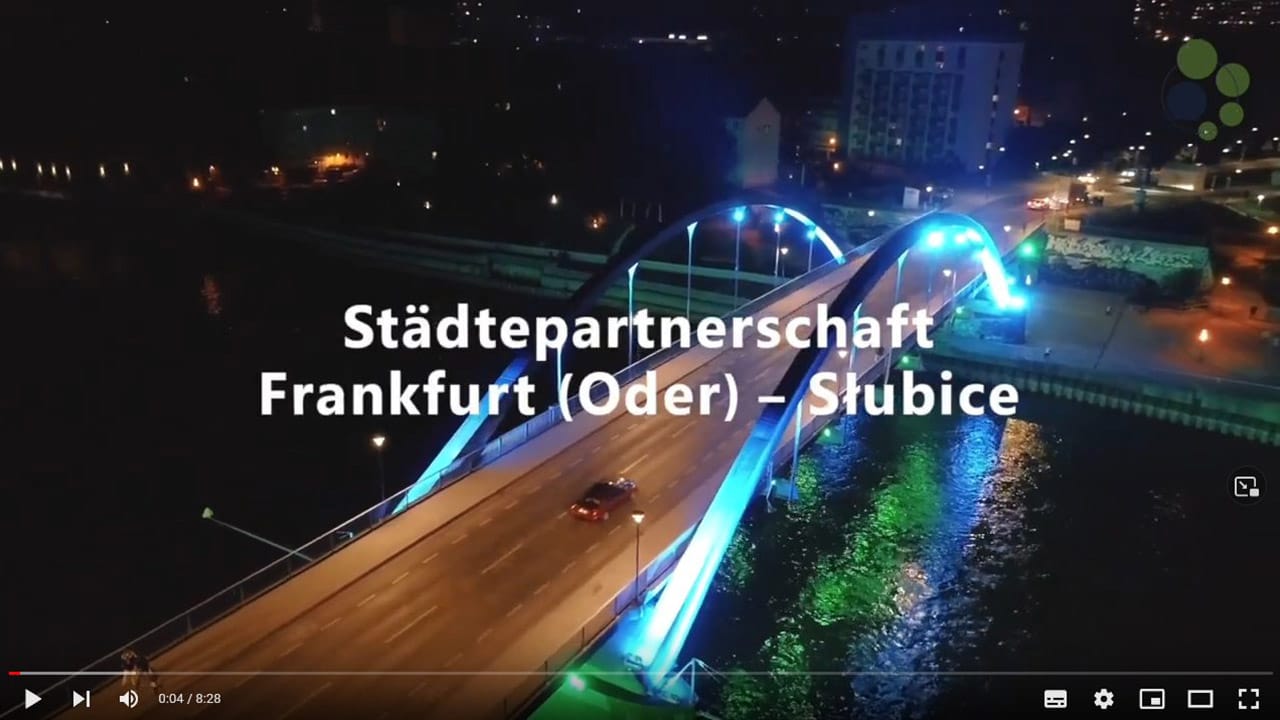
The Corona pandemic had a great impact on the lives of people in the partner city of Słubice and Frankfurt (Oder). Especially citizens living at the border area were impacted by the restrictions – commuters could no longer pass to the other side of the river for work, families could no longer see each other. Despite all this, it was possible to organise support with great civil society commitment through direct and rapid communication, which underlined the importance of cohesion at the boarders.
Learn how the two cities have worked together to tackle the challenges of the pandemic and successfully strengthened their partnership!”
Watch Video at YouTube: https://youtu.be/k0uCJE_yCac