Planning sustainable urban mobility

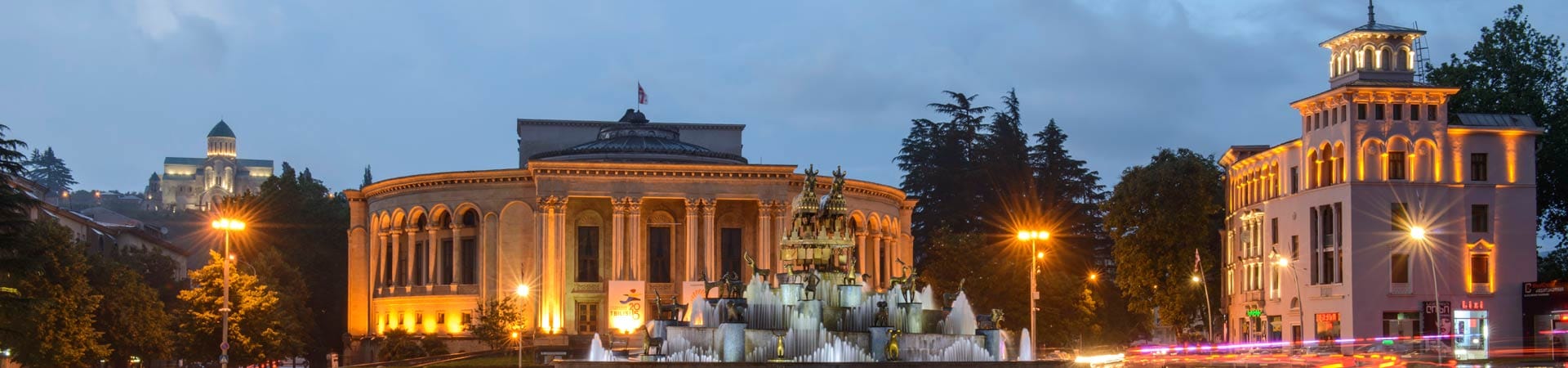
On 14 April, representative of Kutaisi in Georgia and an expert Dr. Haris Piplas met virtually to discuss Kutaisi’s project of SUMP development for their city.

The session focused on several vital aspects in the process of conducting a Sustainable Urban Mobility Plan for Kutaisi, these are:

  • Preliminary preparation phase, during which vison and plan should be envisaged, final working group should be identified and key messages for citizen participation should be drafted;
  • Analysis of the current mobility and urban development situation in the city should be prepared;
  • Scenarios of SUMP implementation should be identified.

Additionally, Dr. Haris Piplas stressed the importance of expertise mobilization as city will need to gather and unfortunately due to lack of data develope a lot of preliminary documents, before jumping into the implementation phase.

Waste Management in Vushtrri, Kosovo

The strategy and implementation of waste management in the city of Vushtrri before and during the pandemic

The city of Vushtrri in north-eastern Kosovo, with around 70.000 inhabitants and an area of 345km2, has significantly improved its waste management, waste separation and recycling in the last three years. While about three years ago, only 40 percent of the territory had access to waste disposal, today it is 100 percent. In addition, illegal waste dumpsite has been reduced thanks to the government from 100 to 11.

How could this outstanding achievement be made? In Kosovo, the municipalities are responsible for waste disposal according to the law. Vushtrri cooperates with the company “RWC Uniteti” for this purpose and has provided each house with a waste bin free of charge. Moreover, citizens in remote parts of Vushtrri also pay the same prices for the service as within the city, although the logistics costs are higher. In this way, the city succeeds in protecting vulnerable groups. Another vital component of Vuhsstri’s success is education. Environmental protection and waste management are addressed in all schools, for example, in so-called “Green Clubs” where pupils carry out projects on recycling.

The Covid-19 pandemic posed many challenges to the implementation of waste management in the city of Vushtrri. One challenge was the loss of revenue last year. Shops and businesses that had to close for several months due to the pandemic and families living in difficult socio-economic conditions could not always afford the cost of the waste management service. In addition, the already unstable price for the sale of recycled waste has been erratic and falling.

How did the city respond to this challenging situation? Vushtrri waived the cost of waste management for all families living in difficult socio-economic conditions from March to December 2020. In addition, an online payment system was introduced. Furthermore, the new waste management action plan 2021-2025 will take into account the lessons learned from the pandemic.

Further Information:

Current Situation of the Waste Management System in Vushtrri (pdf, 980 kb)

Recording of the event (Presentation on Vushtrri starts min. 40): Managing solid waste during the pandemic (Only for those registered on the Connective Cities Platform)  https://community.connective-cities.net/node/468

Contact:

Xhafer Tahiri
Mayor
Vushtrri municipality
Republic of Kosovo
xhafer.sh.tahiri@rks-gov.net

Sustainable, Informed and Participatory Land Management and Land Use Planning in Rapidly Growing Cities

On the 11th, 12th & 14th of May 2021, Connective Cities held a dialogue event to address the topics of integrating nature-based solutions in land use planning, land information systems and participatory & inclusive land use planning. The event attracted the participation of 38 participants from municipalities, local government associations, national governments, research institutions and civil society organizations. The countries represented include Burkina Faso, Cameroon, Ethiopia, Germany, Ghana, Kenya, Netherlands, Rwanda, Senegal, South Africa, Uganda and Zambia.

The event comprised of input in form of thought-provoking key note speeches and good practices from the cities. It also provided an opportunity for the participants to consult with their peers through collegial learning methodology on challenges they experience in line with the topics of discussion. Out of these, the cities formulated project ideas they would like to pursue in order to solve some of the challenges.

  • Integrating Nature-based Solutions (NbS) in land use planning; how have cities planned for, implemented and protected the green infrastructure amidst the ever-increasing development that is characterized by the grey infrastructure?
  • Land information systems; sharing on tools and mechanisms applied by municipalities to ensure that a robust information system contributes to sustainable urban development
  • Participatory and inclusive land use planning; participatory approaches and methodologies applied to ensure active participation of the different sectors in the city including gender aspects, people living with disabilities and other vulnerable groups. Cities should be designed with and for people.

This report documents in detail the dialogue event.

Sustainable Urban Energy Planning in Southeast Europe

Approximately 90 experts and urban practitioners from more than 30 municipalities within 9 countries of Southeast Europe, gathered to discuss major opportunities and challenges convoked by the shift towards greener energy consumption around the world. As major countries of the world come out with bod statements of reaching climate neutrality by 2050, all of us need to keep up the pace and start acting on the promised shift. The Dialogue event held during the week of 17-21 May focused on discussions of energy efficient solutions, innovative renewable energy sources as well as on getting some new insights into the EU Green Deal.

This event offered a virtual platform to discuss these challenges and supported municipalities in developing locally adapted solutions for climate challenges, specifically those related to energy efficiency and renewable energy sources.

During these 5 days of asynchronous and synchronous digital meetings participants listened to inspiring Keynote presentations from leading European scientists and shared insights with peers.

The project has built a Network, an exchange platform of urban players, which provides a systematic access to practice-oriented solutions for sustainable urban development by facilitating change and providing mutual support.

Municipal experts wanted: Dialogue event on Covid-19 and urban mobility

Connective Cities is organising a three-day dialogue event in collaboration with the City of Wiesbaden, Germany, and UN-Habitat on 19th, 20th and 22nd July 2021. The online sessions are scheduled for 3.5 hours (including breaks), from 13:00 to 16:30 CEST.

The event is aimed at municipal actors from Germany and other countries (municipal administrations, municipal enterprises, civil society, business and academia) who are working on the impacts of Covid-19 on urban mobility and looking for innovative solutions for a post-pandemic future. The highly interactive event gives municipal practitioners involved in urban planning or municipal transport the opportunity to discuss projects and ideas, which are currently being implemented or planned in their municipality.

Thematic focus:

  • Sustainable urban logistics: Impulses for green logistics solutions during and after the pandemic;
  • Cycling/bicycle traffic: Reassessing urban space and the role of cycling for urban mobility;
  • Local public transport: Rethinking financing models and regaining passengers’ trust.

If your city is currently working on or wishes to work on different aspects of urban mobility and Covid-19 and you would like to actively participate in the event, please do not hesitate to contact us!

Objectives of the three-day event:

  • Day 1: To share and discuss examples and good practices from German and international municipalities;
  • Day 2: To exchange ideas for solutions through peer-to-peer consultation on identified challenges;
  • Day 3: To jointly develop project ideas for further cooperation in response to these challenges.

The working language of the event is English. Translation into other languages may be provided on demand. Participation is free of charge and the deadline for application is 9th June, 2021. For more information on the event please read the full “Call for Participants” [pdf, 440 kb, 4 pp.].

If you are interested in actively participating and contributing to the event or have any questions, please contact us:

Alice Balbo, Alice.balbo@staedtetag.de, +49 (0)221-3771-573

Nikola Krause, Nikola.krause@engagement-global.de, +49 (0)228-20717-2672

Thiago Garcia, Thiago.garcia@engagement-global.de, +49 (0)228-20717-2633

Promoting Energy Efficiency through innovative city-led projects

Within the ambit of the learning process on municipal energy efficiency projects in MENA, the virtual dialogue event was held on the 18th – 20th May 2021.  The dialogue event aimed at promoting the exchange of expertise on good practices for planning and implementing energy efficiency projects. As part of the build up towards the dialogue event, several activities were conducted. This included a virtual session conducted on the 23rd March 2021 focusing on developing project proposals for funding of energy efficiency projects as well as a session on energy audits and showcasing of regional good practices (from Hebron and Bizerte) held on the 12th April 2021. Furthermore and as part of the outreach to regional actors, a number of municipalities of Connective Cities network have participated in the workshop of BUILD_ME phase II of the IKI project “Accelerating 0-emission building sector ambitions in the MENA region” held on the 11th of March 2021 to showcase the BEP tool for energy simulation in the building development phase.

Sustainable, Informed and Participatory Land Management and Land Use Planning in Rapidly Growing Cities

On the 11th, 12th & 14th of May 2021, Connective Cities held a dialogue event to address the topics of integrating nature-based solutions in land use planning, land information systems and participatory & inclusive land use planning. The event attracted the participation of 38 participants from municipalities, local government associations, national governments, research institutions and civil society organizations. The countries represented include Burkina Faso, Cameroon, Ethiopia, Germany, Ghana, Kenya, Netherlands, Rwanda, Senegal, South Africa, Uganda and Zambia.

The statistics as highlighted by Oumar Sylla (UN-Habitat) reminded us that the population in the cities is on the rise and this irreversible urbanization trend we are now faced with the challenge of channeling its effects especially in the area of land governance. Mr. Hilmar von Lojewski (DST) then emphasizes that we need to reduce land uses for building purposes to the utmost necessary amount.

This called for understanding of the impact of the rapidly growing cities to the wellbeing of its residents and acquaintance to the different ways in which cities can integrate Nature-based Solutions in their planning & implementation of city plans including green roofs and walls, permeable pavements and green spaces just to mention a few. This was delivered by Heidi Tuhkanen (SEI) and Emmanuel Letebele (eThekwini) showcased how the cities can integrate climate change in spatial development.

This dialogue event thus provided a platform for the cities to learn and exchange. 10 good practices were shared from both the cities in SSA and Germany, 4 collegial consultations held, and 7 project ideas conceptualized.

COVID-19 – The local implementation of vaccination strategies and vaccine communication in municipalities

Since December 2020, municipalities worldwide have been organising the vaccination of their citizens against COVID-19. Not only do they have to ensure that vaccinations run smoothly; they also have to gain people’s trust through innovative communication strategies, and reach vulnerable groups such as the elderly and refugees with important information on vaccination.

The virtual dialogue on vaccination strategies and vaccine communication on 22 and 25 March 2021 was attended by eight municipalities and two local government associations from Germany, Israel, Colombia, Serbia and Togo. It was one of a series of events on COVID-19 held by Connective Cities – the international community of practice for sustainable urban development. Since the summer of 2020, this series of online events has been giving municipalities around the world an opportunity to share their experiences, advise each other on how to control the COVID-19 pandemic, and jointly identify pandemic management solutions.

Tourism in Nepal and the COVID-19 Pandemic

Located in the Himalayas, the mountainous nation of Nepal, with a population of about 30 million, is one of the poorest countries in Asia. The country has little economic power and relies on foreign currency, which is mainly generated through tourism. The unique mountain scenery in the Himalayas, the historic cities in the Kathmandu Valley and the birthplace of Buddha in Lumbini attract millions of tourists every year. For the year 2020, which was declared the year of tourism by the Nepalese government, Nepal expected more than two million tourists – until the Corona pandemic broke out.

Within just a few weeks, the previously thriving tourism industry collapsed and over 230,000 jobs in the tourism sector were at risk. In a country where only ten percent of employees are members of social security schemes, this has serious impact on the economy and the population.

Patan (Lalitpur Metropolitan City), located in the Kathmandu Valley, whose central Durbar Square is a Unesco World Heritage Site, had to consider new strategies for the hard-hit tourism industry. While currently the country’s borders are still closed and there is no international tourism in Nepal, the city has taken steps to boost tourism in Patan in the long term and at least partially offset the loss of income in the short term.

Among other things, Patan is trying to promote domestic tourism. The historical center is of interest to locals, who can discover the city’s history, which is often unknown even to them, on guided tours.

The city is also bridging the time until international tourists can visit Nepal again with preparatory measures. For example, old, historic buildings are being renovated and local cuisine and home stays are being marketed. A night market will also be held in the center of Patan in the future. By offering a wider range of products, Patan is to become even more attractive to local and international tourists in the future.

The city is working closely with key tourism stakeholders to develop a strategy for this current transition phase.

However, the measures taken in Patan presuppose that the national borders will soon be reopened and that international tourism, especially from India and China, can resume.

Further information

Responding to COVID -19 Challenges- How Nepal’s Tourism Sector, in collaboration with the local cities, is finding its way out
Deepak Adhikary, Principal Consultant and CEO, Frontline Development Solutions, USA

Good Practice: Strategies and Actions to get Tourist back to Patan (Nepal)
Prafulla Pradhan, Advisor, Lalitpur Metropolitan City, Nepal

Event Recording (Presentations on Nepal start min. 63): Tourism Sector addressing the Pandemic – Working with Local Municipalities (Only for those registered on the Connective Cities Platform)

Contact

Lalitpur Metropolitan City, Nepal info@lmc.gov.np

Hebron – Promoting a healthy learning environment in public schools

The “Dr. Hafiz Abd-Nabi” public school was constructed as a green building that is naturally ventilated, heated and cooled. In comparison to regular school buildings in Hebron, this school building exhibits improved indoor air quality in classrooms. Thermal comfort is achieved mainly via passive design thus reducing the need for auxiliary heating and cooling. As a result, students enjoy a healthy learning environment in both heating and cooling seasons.

The project is a fruitful cooperation between the Belgian Development Agency, the Palestinian Ministry of Education, and Hebron Municipality.