Principles for Better Cities

We are now living through a period during which we are both struggling to find adequate ways to characterize the dominant urban challenges and to respond adequately to those challenges. It is indicative of this complexity that we live in a period that is simultaneously being criticized as ‘the Anthropocene’ and, more optimistically, called ‘the Urban Age’. This is the era in which humans have had a profound impact upon the earth’s ecological systems. It is also the period during which the planet has become overwhelmingly urbanized. Likewise, social relations are ever more global, and thus, at one level, diffuse. To address local challenges, global targets have been set up to inspire and guide common efforts in sustainable development.

Arguably, responding well to the current challenges is best achieved by a set of integrated principles that firstly link highlevel aspirations to on-the-ground practical guidelines. Secondly, it is best realized through recognizing global and generalizing patterns while being sensitive to local particularities and priorities. Thirdly, it requires simple and aspirational principles at the top level but, at the same time, a grounding in more complex detail as the process goes deeper.

Principles for Better Cities is a collective response to that set of tensions. The document attempts to meet those contradictory needs by outlining a set of layered principles (Part I) while providing a method for translating between other existing charters, frameworks and sets of principles such as the Sustainable Development Goals (Part II).

Women’s Training and Development Center in Hay Al-Andalus municipality in Libya

The Centre for Women’s Development and Training was planned as a socio-economic project that aims at women’s economic empowerment and promoting female entrepreneurship. The center provides job matching services and capacity development courses that include trainings on various scientific and social topics as well as recreational activities that target the wellbeing of the beneficiaries.

The project is part of the European Union and Bundesministerium für wirtschaftliche Zusammenarbeit und Entwicklung (BMZ)- funded “Support to Municipalities” programme in Libya, which is implemented by GIZ in cooperation with the Libyan Ministry of Local Governance and the Municipality of Hay Al-Andalus. Other key stakeholders included the local civil society, the office of women’s empowerment in the presidential council, the Ministry of Labour and businessmen in the municipality.

Sustainable and resilient, regional and intermunicipal land management

The three sustainability dimensions “ecologically sound”, “economically successful” and “socially just” are always in focus in municipal urban development projects. This also applies to municipal land management. The integration of these three aspects and the resilience factor in land use planning and zoning strategies as well as in existing development under constantly changing conditions is one of the main tasks of municipal experts. Conflicts of objectives and interests often arise, which are not always easy to solve.

Nearly 30 municipal practitioners from 14 cities, 7 countries and three continents intensively exchanged their experiences on the topic of “sustainable and resilient, regional and intermunicipal land management” and developed joint approaches and project ideas. They had accepted the invitation of Connective Cities and the city of Trier to join the virtual dialogue event, which took place from November 18 to 20, 2020.

Starting with an exchange of experiences on good practices and projects in the cities, challenges in implementation were identified and finally two project ideas were developed for Amman (Jordan) and Rostock (Germany), which may lead to an improvement of the respective strategies and implementation plans in this thematic area.

Closed pilot cycle of plastic recycling in Rustavi

Rustavi is the fourth largest city in Georgia and one of the most important industrial centers. In this city, with partnership of Rustavi City Hall, Rustavi Innovations Hub and its partners, and support of UNDP Georgia, in 2019, was established and launched a closed plastic waste recycling pilot cycle involving municipal kindergartens and public schools. 

International exchange of experiences: lessons learned in the Covid-19 crisis

As soon as it was clear that the Covid-19 would pose serious challenges to municipalities around the world, the Federal Ministry for Economic Cooperation and Development (BMZ) addressed Connective Cities to adapt its methodology to provide municipal practitioners with an opportunity to share their experiences in an agile and flexible way.

In many ways, local authorities are constantly at the forefront of global challenges, as they are the first level of government to feel the impact of any crisis. Yet municipalities also have the potential to act as fruitful sources of innovative solutions in addressing these challenges, and those solutions would also require cooperation with different levels of government and the involvement of many different types of stakeholders: Academia, Civil Society, Private Sector, etc..

The series started in July/2020 and had the objective to help improving the responsiveness and resilience of urban actors through exchange and peer-to-peer learning by promoting the exchange of practical solutions between practitioners and to disseminate good practices. The explosive spread of the virus put existing municipal structures and capacities to the test. On the other hand, the interconnectivity and digitalisation opened up the possibility of offering a series of exchange events 100% virtually.

Hardly all the benefits of a well-organised personal exchange can be fully replaced by the current technologies. Nevertheless, in a crisis like the one caused by the Covid-19, technology made it possible to organise more than 35 response dialogue events with the participation of more than 800 specialists in such a short time.

Our main objective was to bring together experiences to be presented during and discuss how local authorities can cooperate, learn from each other and ultimately build their capacity to address global challenges. On the 9th of December, Connective Cities organised the official final event of the series “Municipal Response to COVID-19”.

Besides a keynote presentation from the Head of the Urban Policies and Reviews Unit the OECD, the event on the 9th of December included a showcase of examples from Stuttgart-Germany, Belo Horizonte-Brazil, Aman-Jordan, Tshwane-South Africa and Lviv-Ukraine. In closing an e-learning course on crisis management was presented by Dr. Peter Tinnemann, Head Global Health Science Unit, from the Charité – Universitätsmedizin Berlin.

During our additional session of 2020 on the 10th of December, tools and protocols that cities employ to monitor and control the infection chains during the COVID-19 pandemic were explored. While taking a closer look at the efficiency and effectivity of the tracking systems applied in the South Eastern Europe and the Caucasus, discuss existing challenges, and explore how can we enhance or scale-up tracing strategies. Speakers shared their experiences from different levels of local governance and research from Georgia, Serbia and Germany.

The Connective Cities team would like to thank all the inspiring and impressive urban practitioners who invested their time in sharing and discussing their good practices in response to the pandemic. In 2021 Connective Cities will continue to offer events and exchanges focused on the municipal needs connected to the Covid-19 pandemic. We warmly invite you to stay connected through our website and all our social media channels and stay tuned for updates and future events.

Virtual Global Exchange

The exchange was designed to bring together urban practitioners from all over the globe. The goal was to ignite creativity, innovation, solidarity and motivation, while creating and enhancing this global community of practice around the common purpose of combating the global COVID-19 pandemic and its consequences with smart local solutions and strategies.

During the first week, urban practitioners and experts from different municipalities, the civil society, business and academia, presented a total of 56 Good Practices in 18 sessions and gave insights into their experienced challenges and local solutions to deal with the pandemic. The exchange were centered around the nine topics were Public Health, Crisis Management, Economic Response, Housing, Education, Digitalisation, Crisis Communication, Innovation, and Green Urban Recovery.

The second week was about receiving practical “How To” workshops with practical exercises on topics that came up repeatedly during the exchange events such as: social media usage, digital tools, and how to plan for virtual meetings. Finally, the newly learned mindsets and tools could be applied in a 4-hour solution design workshop.

Download documentation

Virtual exchange of expertise on cooperation with the informal waste sector

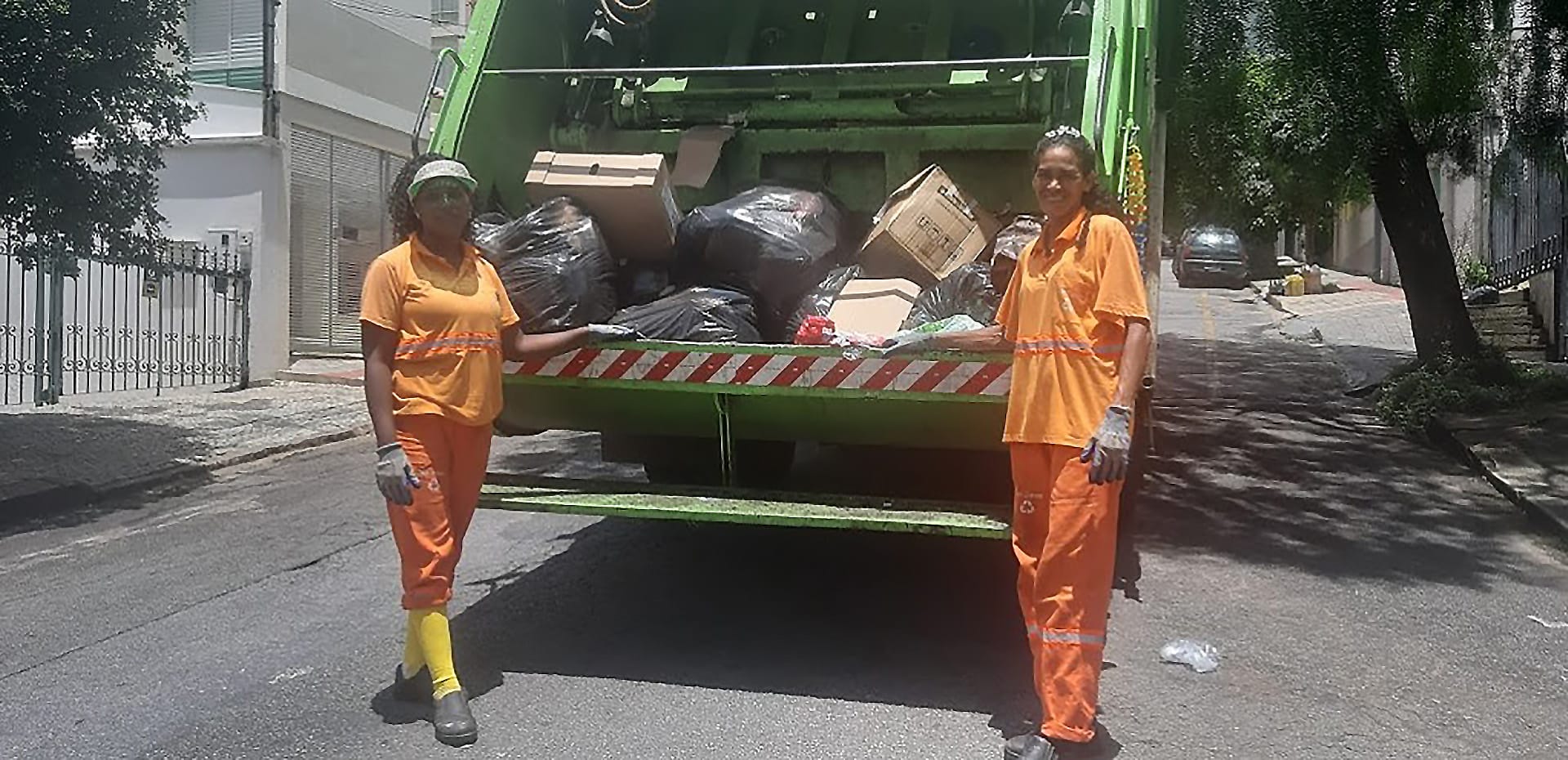
As it is not possible to organise expert missions on site in 2020 due to the Covid-19 pandemic, the Municipality of Mitrovica took the opportunity to engage in online discussions with experts from Germany, Belo Horizonte (Brazil) and Quito (Ecuador). The topic of the exchange was the establishment of an organisation for informal waste collectors in the city. Mitrovica had formulated this project idea during the Connective Cities dialogue event on plastic waste, which took place in December 2019 in Hamburg.

Climate Resilient Urban Development in Southeast Europe

From October 26th until November 6th 2020 around 30 urban practitioners from 11 Southeast European cities (from 8 different countries Georgia, Bosnia and Herzegovina, Montenegro, Belarus, Serbia, Slovenia, Ukraine, Germany) came together virtually to exchange their experiences and expertise in the field of Urban Mobility and Green Urban Infrastructure. Especially challenges in waste management, transportation and public lighting system and water revitalization were discussed intensively, as they represent pressing issues for many Southeast European cities.

The aim of the workshop was to jointly work out comprehensive project plans which can be the basis for technical and financial proposals for funding. The workshop focused on the following topics:

  1. Green Infrastructure – based on the notion that protecting and enhancing nature and natural processes are consciously taken into consideration in the context of spatial planning and territorial development.
  2. Urban Mobility – developing and implementing sustainable urban mobility plans (SUMP) including private as well as public transportation.

The event was a follow-up to the virtual dialogue event conducted in June 2020 with representatives of 24 municipalities as well as international experts. Where, based on innovative methodologies such as Design Thinking, participants from 9 countries worked on their first project ideas.

These two weeks of synchronous and asynchronous workshops were participated by the officials from institutions, representatives from urban networks that share the project’s objectives, and experienced professional from the civil society and the private sector, who work in the thematic areas as well as academia in the field of urbanism, spatial planning, geography, climate change and other disciplines. During the workshop, also donor organizations were invited to get to know the projects, to answer questions of the municipalities and to support financial proposals and grant applications written in a professional way.

Local Development Program for the City of Agadir in Morocco

Agadir municipality has pursued ambitious policies aimed at enhancing the quality of life of the city’s inhabitants, while protecting the environment and fostering sustainable development. The undertaken efforts targeted various key areas, in which the requirements and responsibilities for achieving environmental, social and economic sustainability were met.