


This sourcebook on climate-proof urban development addresses key issues at the interface of climate change and urban development. Its content builds on the knowledge gained in the global project ‘Cities Fit for Climate Change’ (CFCC). It has been elaborated over the project’s three-year course through great contributions by the project partners from Chile, India and South Africa. The sourcebook is divided into three parts:
Part I describes the thematic context and provides a background to the global CFCC project. It introduces the Climate-Proof Urban Development Approach (ClimPUDA), a framework for practitioners to address climate change in the urban context. The considerations entailed in this approach are used throughout the sourcebook and constitute its conceptual foundation.
Part II focuses on good practices of climate-proof urban development. Different case studies from the Global North and the Global South represent the broad range of experiences available. Each case study is analysed based on four Fields of Action (FoA) which are part of ClimPUDA. They are (1) Governance and Management, (2) Policies and Strategies, (3) Measures: From Policy to Action, and (4) Capacity Development.
Part III provides further information in terms of capacity building in the field of climate-proof urban development and also contains all sources on which the sourcebook is based.
Autor: erik
Mixed reality for public participation in urban and public space design

Mixed reality is a new technology that enables visual experiences where physical environments and digital objects coexist and interact with each other in a realistic way. In practice, this means you can look through a mobile device and see digital objects and models as if they were really there. This report is based on more than two years of research by a team of UN-Habitat urban planners and Ericsson researchers. Mixed reality technology – although still in its infancy – might offer the opportunity to bridge the divide between inhabitants and their cities, making change literally appear before their eyes and giving entire neighborhoods the chance to weigh in on how their future smart city will look, feel and serve their needs.
This new visually realistic blending of reality with virtual imagination can create a more intuitive space for planners, architects, residents and other stakeholders to viscerally experience and re-imagine future environments. Architectural sketches and designs can be made more legible and accessible, thus pulling users into the process of design and strengthening the long-term viability and buy-in of urban projects.
2019 SDG Indicators and Dashboards Report for European Cities

"This is the first report comparing the performance of capital cities and a selection of large metropolitan areas in the European-Union (EU) and European Free Trade Association (EFTA) on the 17 Sustainable Development Goals (SDGs). In total, results for 45 European cities are presented in this first prototype version.
Achieving the SDGs will require, at the local level, deep transformations in transportation, energy and urban planning and new approaches to address poverty and inequalities in access to key public services including health and education."
How to Formulate a National Urban Policy

Many governments have difficulty in formulating a NUP due to insufficient capacity, ever changing political contexts, complex relationships between government departments/ministries, and political pressures from interest groups. Consultation is key during the formulation phase to build consensus. Good policy formulation requires political will, visionary leadership, organizational know-how, effective consultative mechanisms, and good negotiating skills on the part of the ministry or department in charge of urban issues. This Guide suggests that before starting the formulation process, it is essential that a thorough diagnosis of the urban sector is carried out, with extensive data collection, review and analysis. It is also advisable to assess the available capacity (human, financial, institutional and technical). Following this, aspects to consider in the formulation of a NUP include the selection of the lead agency, the quality of the data and information that is available, how the various stakeholders will participate, what resources are available, how the process will be coordinated, and what the context is – the needs and issues that will frame the policy.
According to this practical guide, a national urban policy (1) responds to the country’s development priorities, (2) is based on sound evidence, and (3) is focused on outcomes. This handbook provides practical steps and a coordinated process to formulate an urban policy that adheres to five key principles: participation, inclusion, affordability, sustainability and implementability.
Solutions for and by cities

"The Guangzhou International Award for Urban Innovation is dedicated to decentralised, city-to-city cooperation and sharing lessons learned from experience. Its focus covers the three pillars of sustainability: social, economic and environmental, and two additional domains – governance and technology.
The fourth edition of the Guangzhou Award was a remarkable show of these links between innovation and learning from different stakeholders. This publication is an attempt to extend the prestige of the initiatives that were shortlisted for the award, and to spread their legacy to even broader audiences."
Reduzierung der Luftverschmutzung
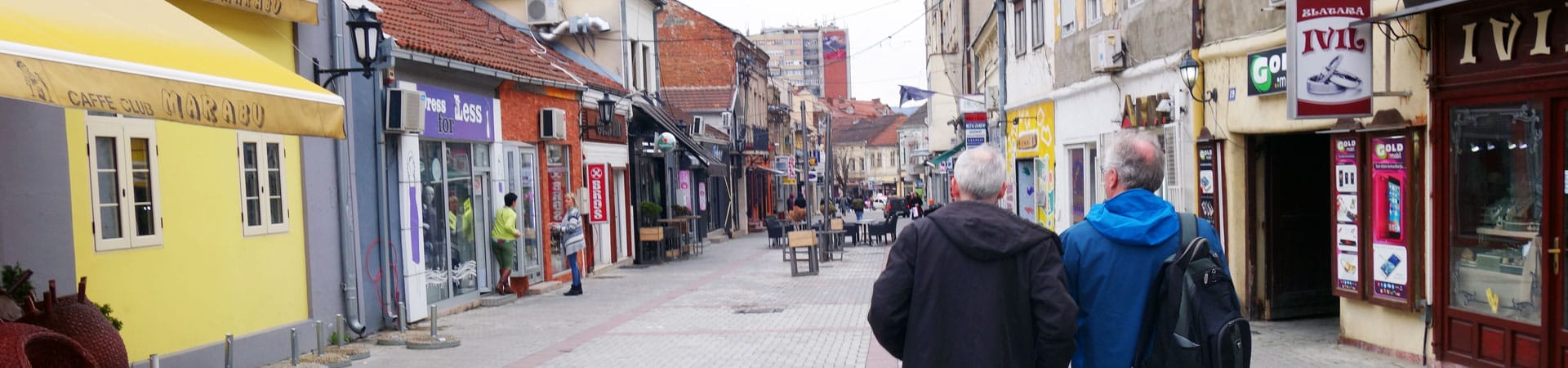
In Anknüpfung an den Regionalen Dialog und Praktiker-Workshop zu „Nachhaltige urbane Mobilität und Klimawandel“, der vom 20. – 22. Februar 2018 in Tbilisi, Georgien, durchgeführt wurde, reisten vom 11. – 13. März 2019 zwei deutsche kommunale Experten aus den Städten Hagen und Heidelberg nach Serbien, um lokale Akteure in der Stadt Kragujevac bei der Ausarbeitung eines Konzepts zur Planung einer umweltfreundlichen Mobilitätsstrategie und Einrichtung einer Luftreinhaltezone zu beraten.
Rechtliche Aspekte des entwicklungspolitischen Engagements kommunaler Unternehmen

Kommunalwirtschaft steht der öffentlichen Hand nahe und daraus ergeben sich besondere Handlungs- und Sorgfaltspflichten, die sich auf entwicklungspolitisches Handeln auswirken können. Das Gutachten lotet Spielräume und Voraussetzungen des Engagements aus, die sich je nach Organisationsform, Ausgestaltung von Gesellschaftsvertrag bzw. Satzung oder Sitz eines kommunalen Unternehmens unterscheiden können.
Es zeigt den rechtlichen Rahmen auf und bietet der Kommunalwirtschaft so die nötige Hilfestellung für ihr Engagement, widmet sich offenen Fragen und beseitigt Unklarheiten, damit noch mehr kommunale Unternehmen den erfolgreichen Beispielen gelungener kommunaler Entwicklungspolitik folgen.
Flucht, Migration und Integration: Diversität leben, Zusammenhalt fördern

Osnabrück lebt als Friedensstadt den Leitgedanken „Frieden als Aufgabe – dem Frieden verpflichtet“, und ist stolz auf ihre gelebte Vielfalt – Zugewanderte sind seit Jahrzehnten Teil der Bürgerschaft. Anhaltend hohe Wanderungsintensitäten, eine wachsende diverse Gesellschaft aber auch rezente Fluchtbewegungen erfordern jedoch ein neues Denken im Sinne eines ganzheitlichen Integrationsmanagements bei dem Stadtrat, Stadtverwaltung, Bürgergesellschaft und Institutionen eng zusammenarbeiten.
Rethinking the ecosystem of international city networks

Cities have emerged as major players on the international scene in recent years. Yet, their ambition to project themselves internationally and to influence global agendas is not a new phenomenon. Cities have operated through organised networks for decades. The first international organisation of cities was the International Union of Local Authorities, created in 1913. Towards the end of the past century, the regional integration processes of the 1990s engendered a proliferation of city networks, especially in Europe but also in Latin America, Africa and Asia. In 2004, the founding of United Cities and Local Governments as a platform for international municipalism marked a turning point.
Today city networks play a growing role in defining and implementing some of the main global agendas. Their involvement in the United Nations Conference on Climate Change, their success in adding a territorial dimension to the UN 2030 Agenda, and their participation in the Steering Committee of the Global Partnership for Effective Development Co-operation, are good examples of how city networks are making their voice heard. But the increasing importance attributed to urbanisation processes on international development agendas has also caused a reconfiguration of the ecosystem of city networks that brings with it both risks and opportunities.
This volume seeks to analyse the changing dynamics of the ecosystem of city networks, focusing on how the main platforms operate, what influence they have on global agendas, what services they provide and how they coordinate their efforts. By zooming in on the strategies networks have been developing to enhance their influence and make their operations more effective, the volume examines the added value they provide.
Gemeinsam, gleichberechtigt und selbstbestimmt
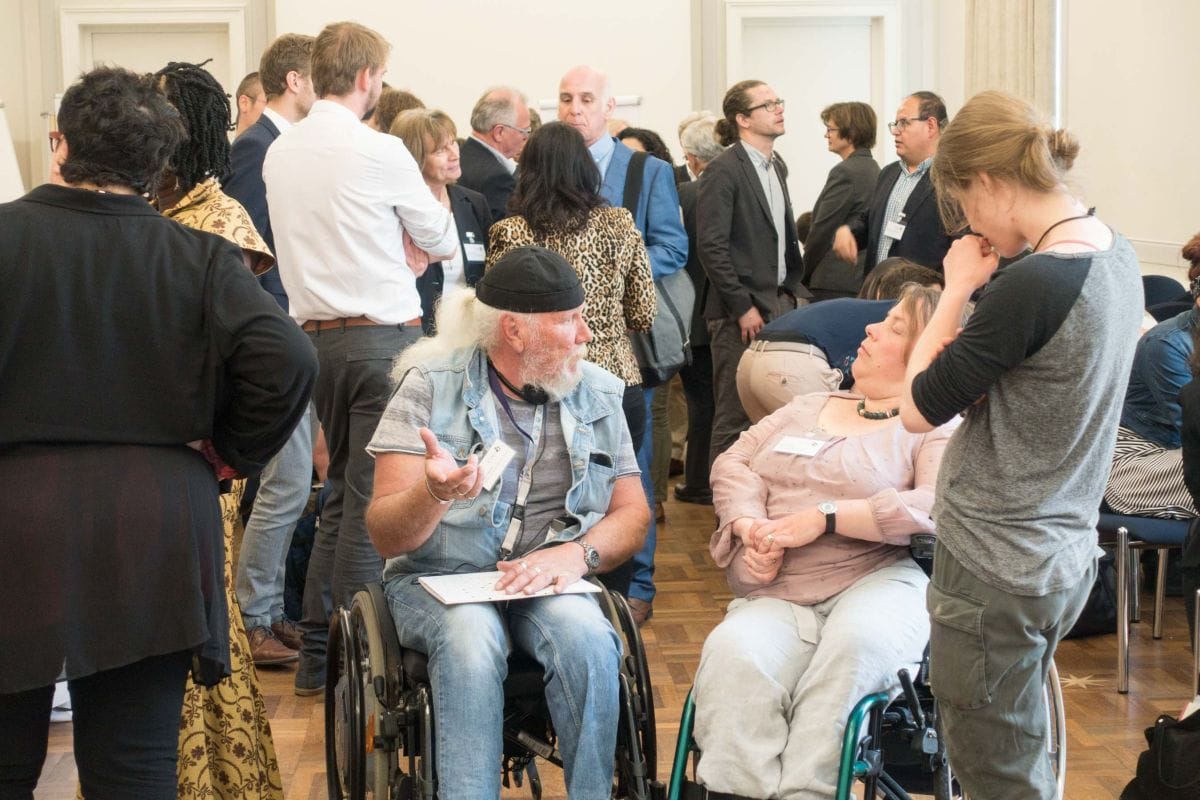
Bonnerinnen und Bonner mit Behinderung sollen in jeder Lebenssituation in das gesamte Stadtleben einbezogen sein, so wie alle anderen auch: Das ist das Ziel der Bundesstadt Bonn. Sie hat dazu den „Behindertenpolitischen Teilhabeplan für die Bundesstadt Bonn“ entwickelt – partizipativ und inklusiv.