


Im Zusammenhang mit Fragen des Klimaschutzes, der Inklusivität und der Gesundheit gewinnt eine nachhaltige städtische Mobilität weltweit immer mehr an Bedeutung. Insbesondere in Lateinamerika und der Karibik gibt es eine Vielzahl von Herausforderungen für den Stadtverkehr, die die Umsetzung wirksamer politischer Maßnahmen und innovativer Ideen erfordern. In der vorliegenden Publikation werden die Herausforderungen und Möglichkeiten im lateinamerikanischen Kontext beleuchtet, wie die Mobilitätsbedingungen für die Städte der Region verbessert und ein Beitrag zu den Nachhaltigkeitszielen geleistet werden kann.
Autor: erik
Climate Resilience and Urban Development

Viele lateinamerikanische sind Vorreiter bei der Umsetzung von Umweltmaßnahmen und bei Anpassungen an die Auswirkungen des Klimawandels. Diese Peer-Learning-Note fasst gute Praktiken lateinamerikanischer Städte zusammen und legt den Schwerpunkt auf die Themenbereiche Risikobewertung, umfassende Planung, Finanzen und bürgerschaftliches Engagement.
Die guten Praktiken wurden diskutiert im Rahmen unserer Connective Cities Peer-Learning-Veranstaltung, die vom 26. bis 28. November 2019 in Niteroi, Brasilien stattfand.
Die Publikation liegt in englischer, spanischer und portugiesischer Sprache vor.
Weitere Information
Kurzdokumentation mit allen Präsentationen und bildern der Veranstaltungen
Handbook for Gender-Inclusive Urban Planning and Design 2020

Urban planning and design shape the environment around us – and that environment, in turn, shapes how we live, work, play, move, and rest.
Cities have historically been planned and designed for men and by men. They tend to reflect traditional gender roles and gendered division of labor. In general, cities work better for heterosexual, able-bodied, cisgender men than they do for women, girls, sexual and gender minorities, and people with disabilities.
The Handbook for Gender-Inclusive Urban Planning and Design seeks to respond to these urgent questions: how might we design and plan cities that work well for everyone? What would such a city look like, and how would we go about creating it? By showing why to incorporate gender inclusion into urban planning and design it sets out practical approaches, activities, and design guidelines that show how to do this.
Reclaiming Play in Cities Report

The report, launched at the 10th World Urban Forum, reviews the evidence around learning through play and the impact that city and urban environments have on children’s access to play and ultimately, their overall development.
Play is increasingly being recognised as the engine of optimal child development, future happiness and achievement. Modern play has become a multi-dimensional, multilayered experience, where narratives and characters flow easily between different play-spaces. From virtual, online and augmented life-worlds into the physical domain and back again, play has become a seamless set of interlinked experiences and opportunities for learning and pleasure.
It is therefore imperative that we design and build cities that meet the needs of children: seeking their input during the design process, providing them with access to play and education, and facilitating their social and cultural interactions.
To better understand the complexity of play in cities and support the design of play-based interventions for children optimal development the report offers a first-of-its-kind Urban Play Framework. The Urban Play Framework assesses four Dimensions
critical to ensure a play-friendly environment for optimal childhood development: they focus on children’s needs, time and opportunity to play, the support and facilitation that enable Learning through Play, and the socio-cultural and urban systems that contribute to play in cities.
More inclusive cities in East Africa: working with politics and informality

Macht und Informalität stehen bei der Bereitstellung von städtischen Unterkünften in komplexer Wechselwirkung. Dieses Briefing basiert auf einer Studie über drei ostafrikanische Städte: Nairobi, Hawassa und Mogadischu. Das dreijährige Forschungsprojekt untersuchte sowohl finanzielle Beschränkungen beim Zugang zu Land oder Wohnraum als auch nicht-finanzielle Zwänge wie zum Beispiel Diskriminierung bestimmter Bevölkerungsgruppen. Die Ergebnisse unterstreichen, wie wichtig es ist, zu wissen, wer die wichtigsten Player auf dem Wohnungs- und Grundstücksmarkt sind. Macht ergibt sich nicht nur aus Reichtum – sondern auch Politiker und andere Autoritätspersonen üben auf diesen Märkten Einfluss aus. Die Identität einer Person – und ihr Einkommen – beeinflusst das Ausmaß, in dem sie sich in diesen Machtstrukturen bewegen kann, sowie die formellen und informellen Systeme, die den Zugang zu Wohnraum regeln.
Digitalisierung der Verwaltung von Nablus
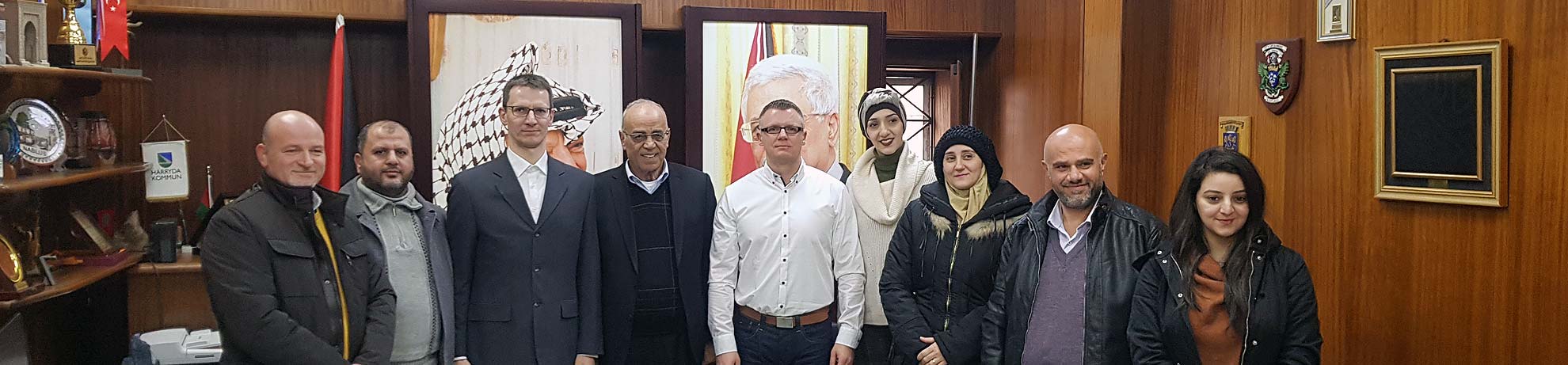
In Anknüpfung an die in Nürnberg 2018 durchgeführte Connective Cities Dialogveranstaltung „Strategies for a Digital City“ entstand ein reger Austausch zwischen den Städten Nürnberg und Nablus. Zur Vertiefung der Kooperation reisten nun zwei deutsche kommunale Experten in die Palästinensischen Gebiete, um die lokalen Akteure in Fragen der kommunalen Digitalisierung zu beraten.
Digitalisierung und neue Technologien bieten vielfältige Möglichkeiten zur Verbesserung der von den Kommunen angebotenen öffentlichen Dienstleistungen. Sie können dazu beitragen, eine direkte Interaktion zwischen der Kommune und den Bewohnerinnen und Bewohnern zu schaffen und somit ihre Dienstleistungen für die Bürger besser zugänglich zu machen. Dies zeigten vielfältige gute Praktiken beispielsweise aus der Ukraine oder Ruanda auf der Connective Cities Dialogveranstaltung in Nürnberg im Oktober 2018.
A Territorial Approach to the Sustainable Development Goals

In the face of megatrends such as globalisation, climate and demographic change, digitalisation and urbanisation, many cities and regions are grappling with critical challenges to preserve social inclusion, foster economic growth and transition to the low carbon economy. The 17 Sustainable Development Goals (SDGs) set the global agenda for the coming decade to end poverty, protect the planet and ensure prosperity for all. A Territorial Approach to the Sustainable Development Goals argues that cities and regions play a critical role in this paradigm shift and need to embrace the full potential of the SDGs as a policy tool to improve people’s lives. The report estimates that at least 105 of the 169 SDG targets will not be reached without proper engagement of sub-national governments. It analyses how cities and regions are increasingly using the SDGs to design and implement their strategies, policies and plans; promote synergies across sectoral domains; and engage stakeholders in policy making. The report proposes an OECD localised indicator framework that measures the distance towards the SDGs for more than 600 regions and 600 cities in OECD and partner countries. The report concludes with a Checklist for Public Action to help policy makers implement a territorial approach to the SDGs.
POLICY HIGHLIGHTS
Download here
Urban mobility

In many developing cities, connectivity is undermined by limited infrastructure and weak public transport systems. If people and goods are unable to move easily across a city, firms get locked into small-scale unproductive activities, and people cannot access basic goods and services.
Policymakers face difficult trade-offs in improving systems of mobility, both in addressing growing demands for private transport, and in investing in public transport links in a city. Learning from the experiences of cities across the world facing these challenges offers some key lessons for effective infrastructure investment and smart regulation to meet growing demands for transport.
We have the power to move the world

The leaders of 14 of the world’s most ambitious and successful sustainable transport cities explain why they are taking action, what they are implementing, the approaches they are taking, and their advice for other cities. Their intension is to inspire and support more cities to show the same leadership. The actions showcased range from expansion and electrification of mass transit, to restrictions on polluting vehicles and improved conditions for pedestrians and cyclists. All the cities featured are signatories to the C40 Green and Healthy (Fossil Fuel Free) Streets declaration.
Global Gender Gap Report 2020

„Since 2006 the Global Gender Gap Index has been measuring the extent of gender-based gaps among four key dimensions: Economic Participation and Opportunity, Educational Attainment, Health and Survival, and Political Empowerment. The index is tracking progress towards closing these gaps over time. The 2020 edition of the report benchmarks 153 countries and provides country rankings that allow for effective comparisons across and within regional peers. The report highlights the growing urgency for action. Without the equal inclusion of half of the world’s tal- ent, we will not be able to deliver on the promise of the Fourth Industrial Revolution for all of society, grow our economies for greater shared prosperity or achieve the UN Sustainable Development Goals. At the present rate of change, it will take nearly a century to achieve parity, a timeline we simply cannot accept in today’s globalized world, especially among younger generations who hold increasingly progressive views of gender equality.“